


Sargassum: deflector nets to be deployed soon
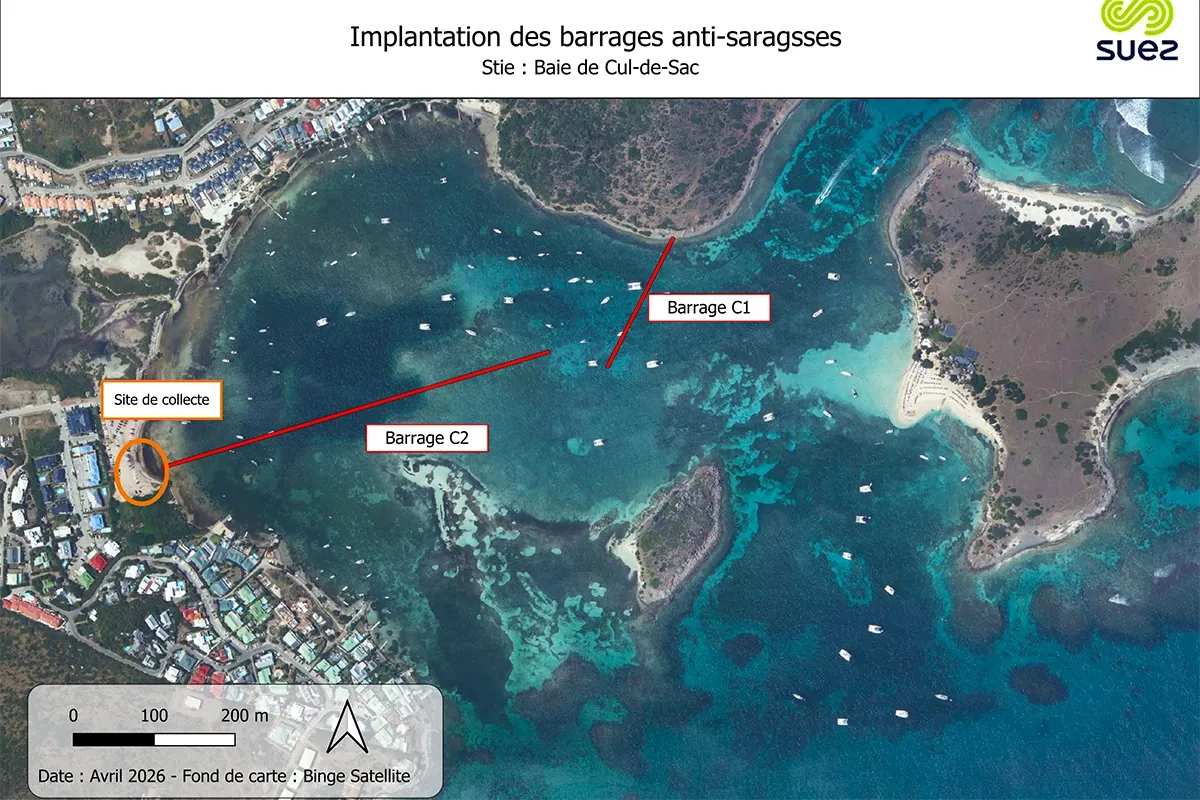
With Météo-France forecasting frequent algae blooms over the coming weeks, local stakeholders are trying to adapt their response measures. By early July, deflection nets are expected to be installed in Cul-de-sac Bay and at the mouth of the Étang aux Poissons.
With more frequent and numerous strandings, and even longer seasons, Sargassum in the Caribbean is no longer just an occasional phenomenon. Since the start of 2026 in Saint Martin, 2,000 tonnes of seaweed have been collected. The Territorial Collectivity employs two companies to carry out “daily beach clean-ups”, says Igor Rembotte, Director of the Environment at the Collectivity of Saint Martin. In 2025, 16,000 tonnes of this brown seaweed were collected on the island. With strandings starting as early as March, 2026 could well be a record year. In Cul-de-sac, Mont-Vernon and Oyster Pond, the smell of hydrogen sulphide (H2S) is a constant feature of residents’ lives. Produced by the decomposition of sargassum, this gas becomes harmful to human health when present in the air at high concentrations.
Tools for combating Sargassum
At present, the measures to combat Sargassum in the area consist solely of using mechanical dredgers to remove the seaweed directly from the shoreline. “Four sections of deflector nets are due to be installed in late June or early July,” says Igor Rembotte. 850 metres of barrier, positioned in Cul-de-Sac Bay and at the mouth of Étang aux Poissons. “We chose these sites because Baie Orientale is too vast to deploy nets there, and Baie Lucas at Oyster Pond is too challenging due to the swell,” explains the Director of the Environment at the Territorial Collectivity. Rigid structures, 80 cm high and fitted with small mesh through which sea turtles cannot become trapped. Manufactured in Europe, these nets will help channel the flow of seaweed to facilitate its collection. In the areas where they are installed, navigation plans will be amended to ensure the safety of vessels.
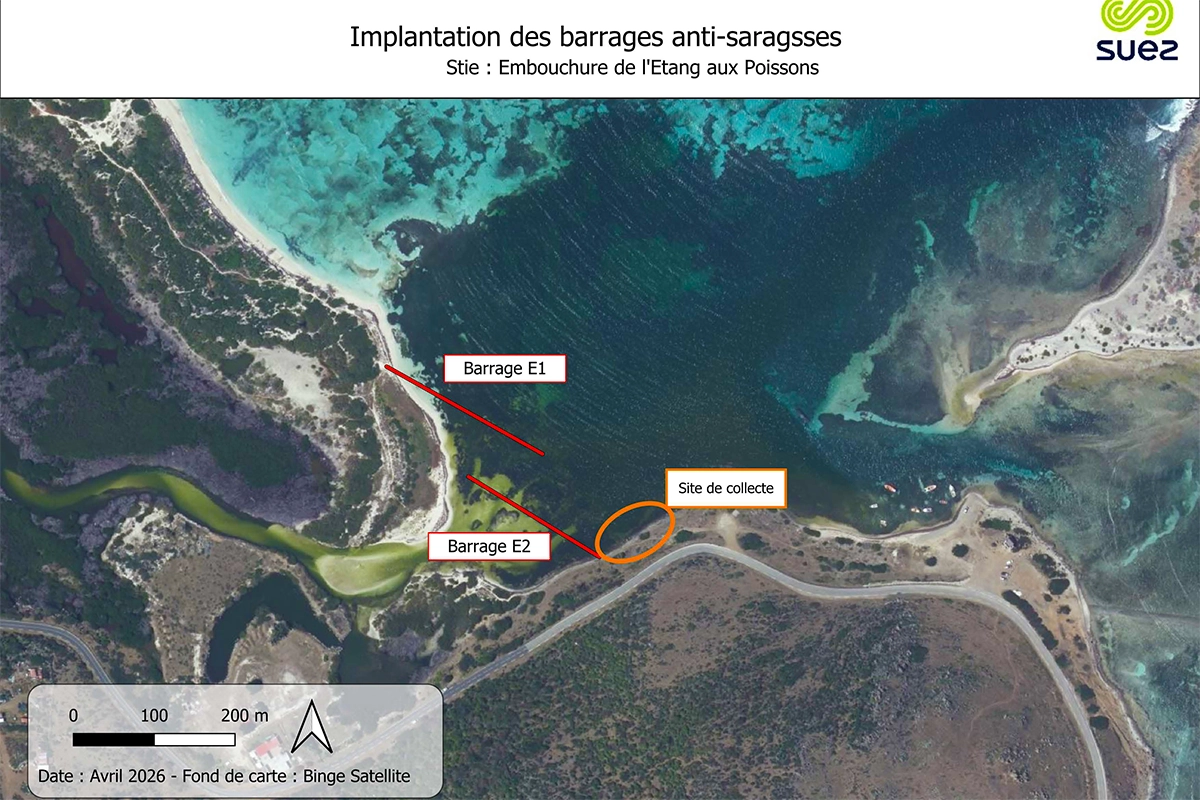
Furthermore, whilst air quality measurements are currently carried out using mobile devices, fixed sensors are also due to be installed “by September”. These tools will measure the amount of hydrogen sulphide in the air and alert the public if levels become too high. Indeed, these toxic fumes can cause respiratory problems, eye irritation, dizziness and headaches.
To gather observations, expectations and proposals for tackling this phenomenon, a public meeting was held during the week of 7 May, attended by Baptiste Le Nocher, national coordinator of the plan to prevent and combat Sargassum at the Ministry for Overseas Territories. It provided an opportunity to engage with local stakeholders and develop the new action plan, entitled “Sargassum 3”. An operational tool that should then enable “public policies to be adapted to the reality on the ground”, says Fabrice Thibier, secretary-general of the prefecture. Built around six pillars – prevention, collection at sea, land-based collection, storage, recycling and health considerations – the future Sargassum control plan will be implemented for the period 2027–2031.