


Bab El Oued? No, Orient Bay!
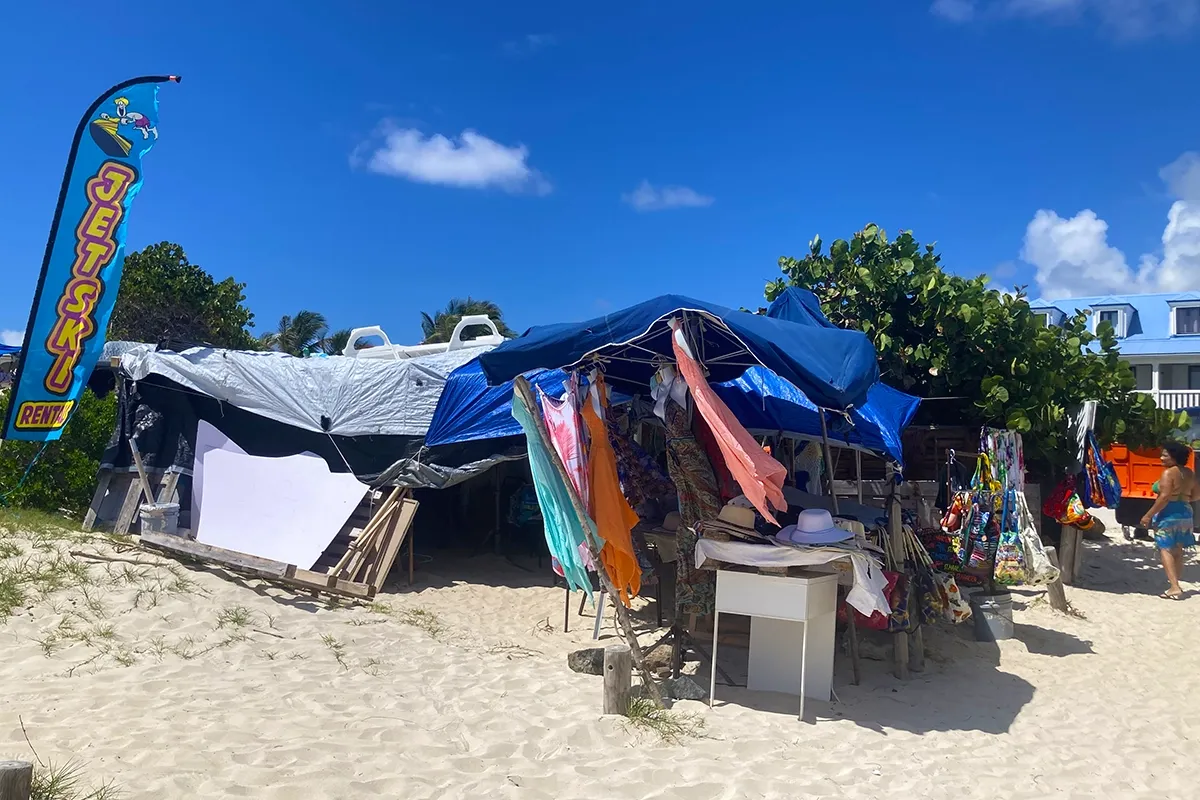
The Baie Orientale, often described as the pearl of the Caribbean and one of the main tourist hubs in the French part of the island, has lost some of its lustre. Indeed, visitors are met with a rather sad sight upon arrival, due to the increasing number of unauthorised squatters who have taken up residence there and show no sign of leaving.
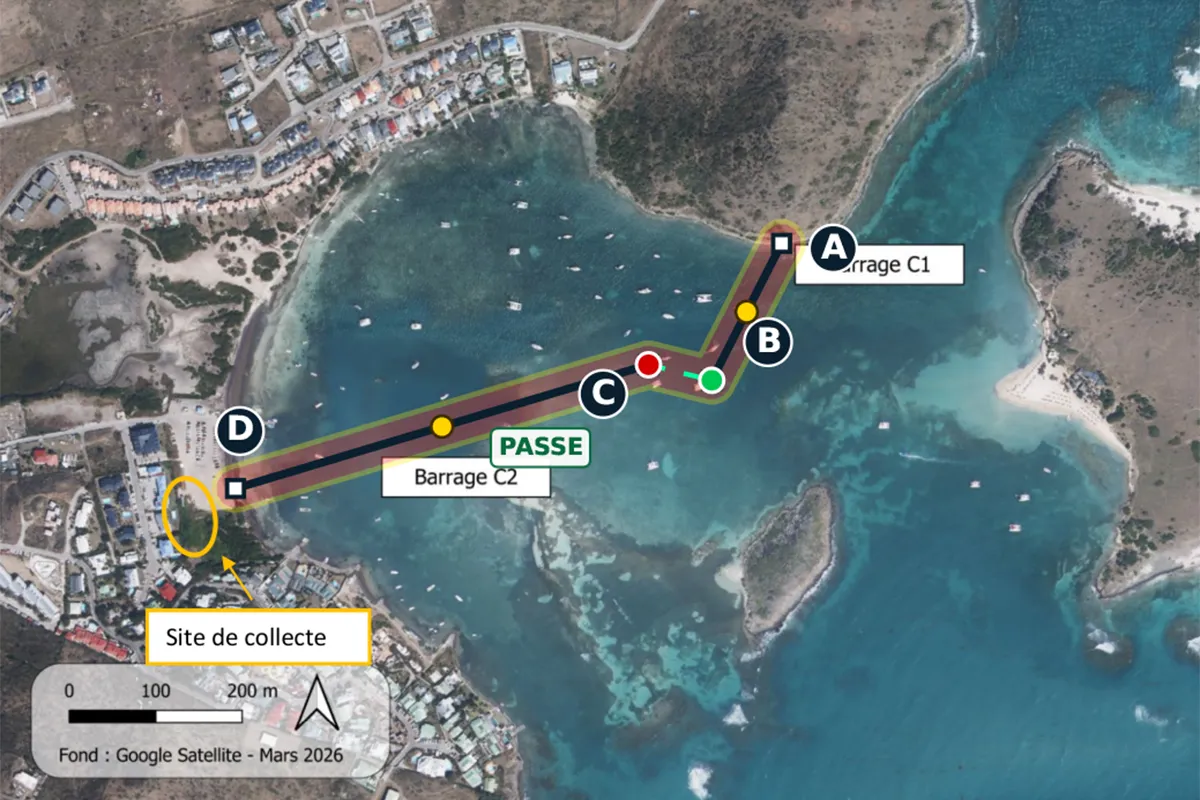
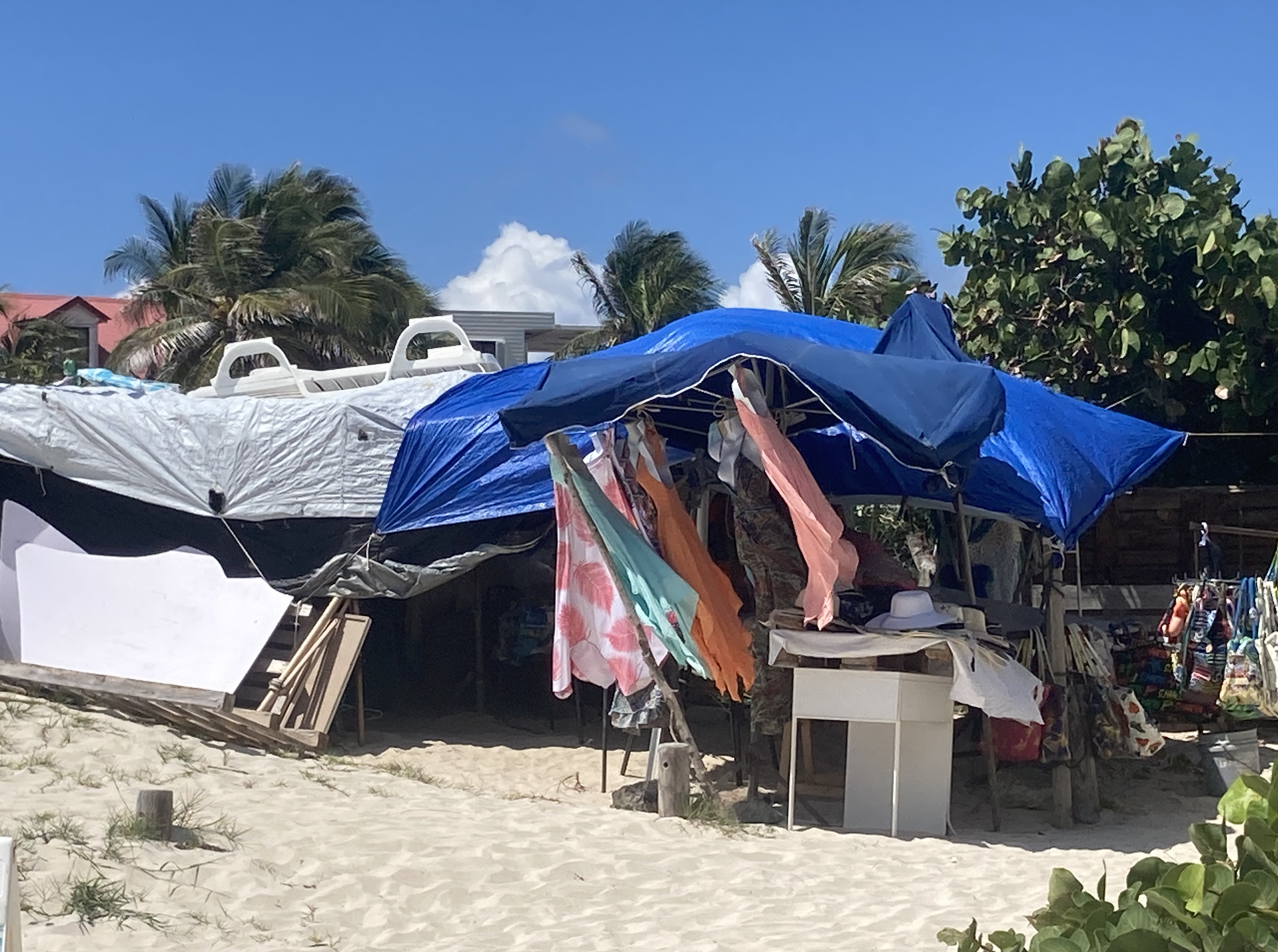
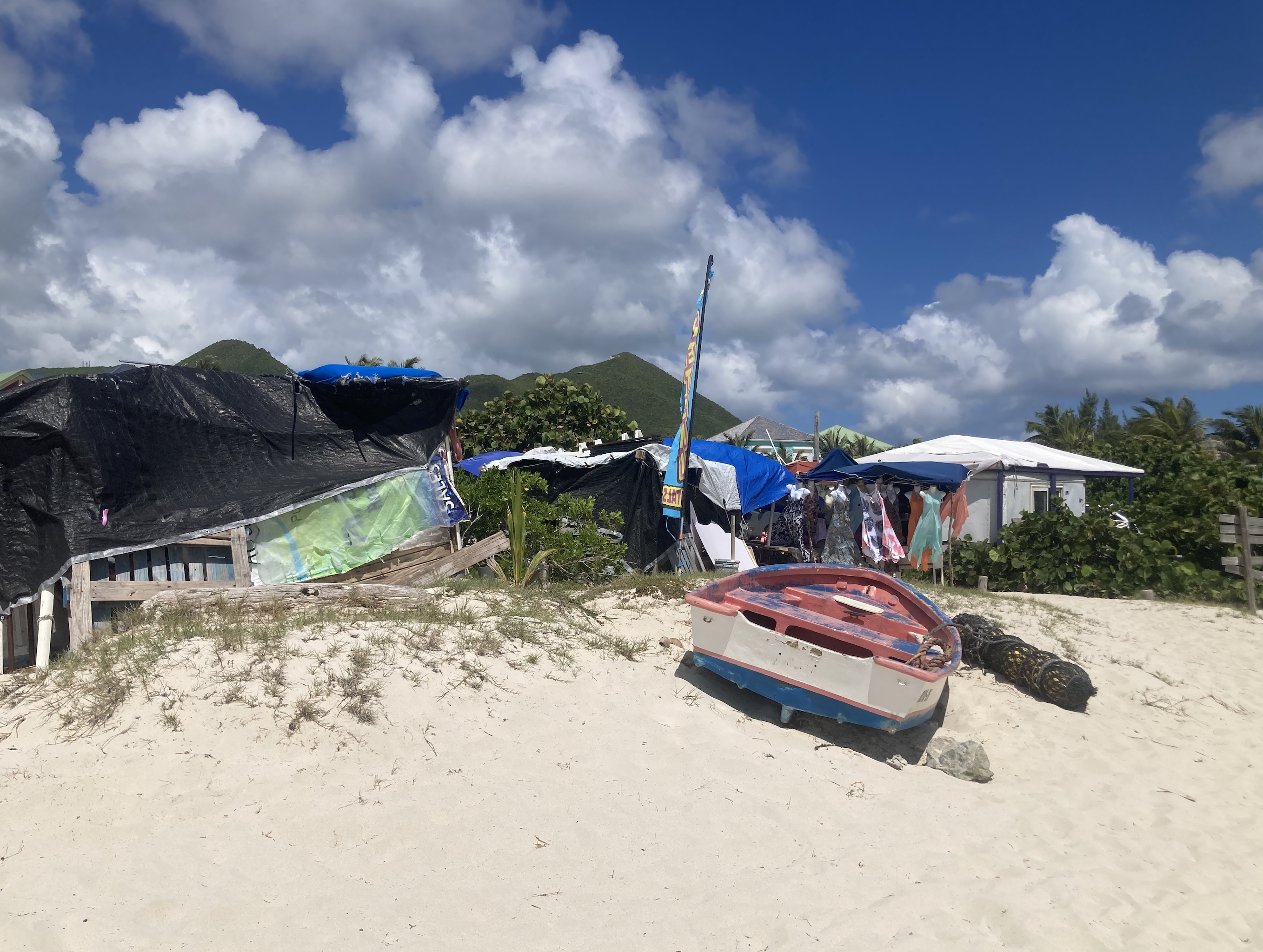
The first sight that greets you upon arriving at this spot, so popular with tourists, is that of a campsite. Tents made from a jumble of tarpaulins, fabric and old parasols, all held together by old deckchairs or pallets, stand alongside small wooden structures that are just as unsightly. Since 2018, season after season, this little village of odds and ends has been growing between the Bikini and Waï Plage establishments.
Double standards?
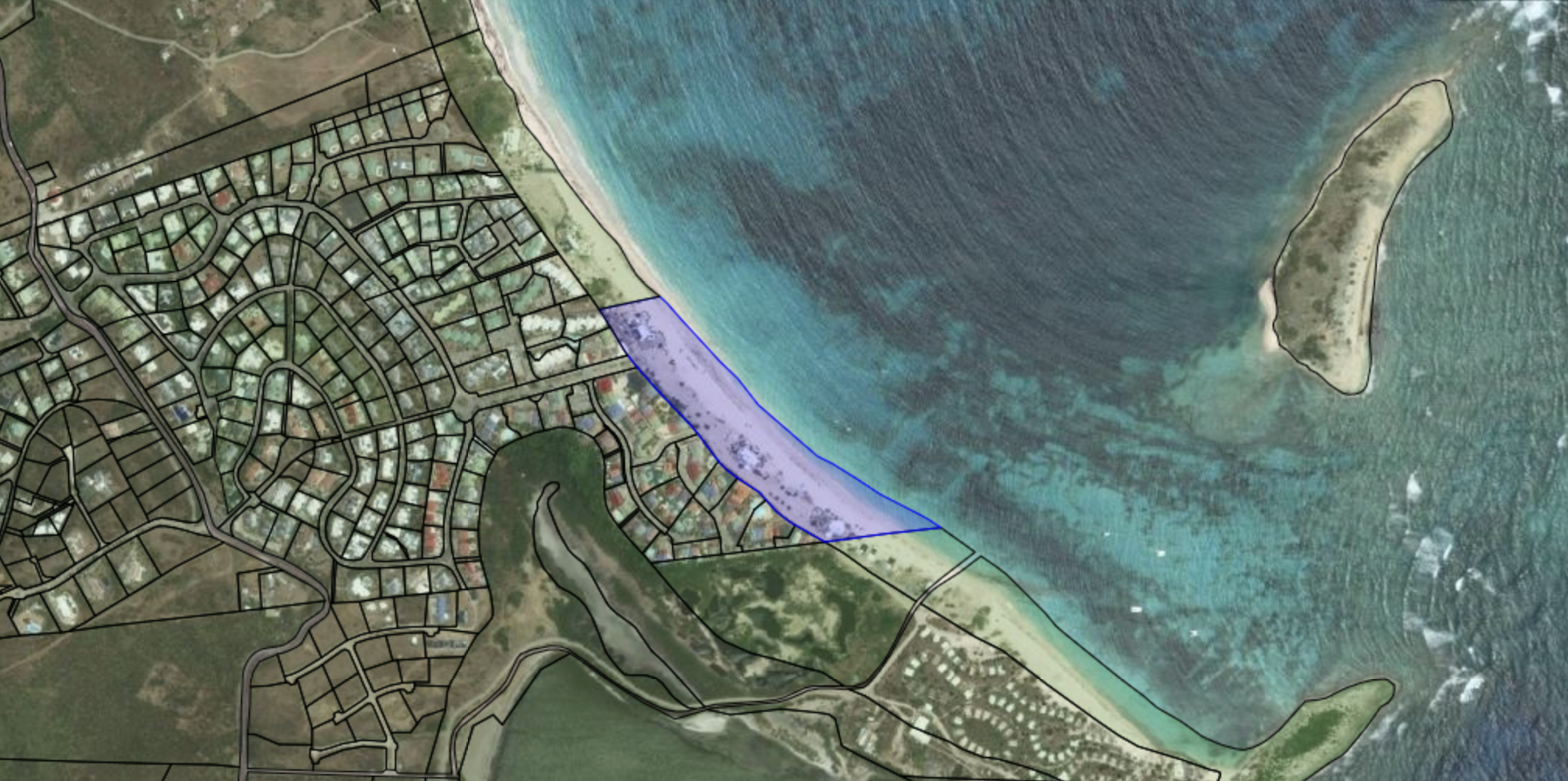
Aside from the rather unsightly image presented by this shanty-town-like jumble, the situation also raises the question of compliance with the rules… for everyone. Contrary to popular belief, the beach and car park in this area are not part of the public domain. The facilities are situated on a registered plot – plot AW33 – which benefits from a Temporary Occupation Permit (AOT) granted by the Collectivité to the company Sindextour. A Temporary Occupation Permit means a fee payable to the Collectivité, and of course, the need to be in good administrative standing, meaning being registered, paying one’s charges and maintaining the occupied property. In short, Sindextour pays rent and covers the costs associated with running its plot (including the car park used by everyone), just as any tenant would. Since 2018, Sindextour has alerted the authorities – both the State and the Collectivité – to no avail.
The occupants of these establishments, which are visually strange to say the least, are not registered in the commercial register and therefore have no legal existence. In other words, they do not pay business tax and do not declare any staff. As for the drink vendors, it’s a lucrative business: €15 for a coconut, after all, but with rum. What about the licence to sell alcohol? As for hygiene standards, with no water or electricity, they inevitably raise questions. For the surrounding establishments, the competition seems quite simply unfair.
From an environmental perspective, the picture is just as bleak. The grapevines replanted after Irma are gradually disappearing, replaced by all manner of rubbish left behind once the day is over. As for the street vendors, who have no permanent premises—or rather, no permanent spot in the car park—they now lay out their wares directly on car bonnets.
Two authorities, one responsibility?
Sindextour, the company most directly affected, is not, however, the only one outraged by the situation. It is a difficult situation for beachfront holiday rentals, which no longer have a sea view, but a view of ‘Made in China’ goods hanging in the trees. The same applies to residents in the area, who face the same nuisances. At their request, the Prefecture’s services carried out a so-called security operation, in conjunction with the border police and the gendarmerie. The offences were indeed noted… but the Prefecture states that it cannot take further action, as the public domain has been transferred to the Collectivité and therefore falls under its responsibility. Only the territorial police can intervene in this case.
When questioned, the Collectivité replied that its ‘living environment’ and ‘ecological transition’ departments had indeed been alerted regarding these installations and sales activities in the Orient Bay area and that ‘this situation is being closely monitored by the relevant departments’. In particular, a site visit was carried out on 15 April by these two departments, accompanied by the territorial police, “in order to remind the occupants concerned of the rules applicable to the occupation of public land and the conduct of commercial activities on the coast”. The Collectivité reiterates that “any occupation of public land must be subject to a valid authorisation issued in due form in accordance with the regulations in force”, specifying that “these rules are intended to ensure the preservation of the coastline, compliance with authorised activities, the safety of users, and a harmonious balance between the various stakeholders present on the site”. The Collectivité’s departments also confirm that “in this context, situations involving occupation without a valid authorisation or failing to comply with the applicable requirements will be subject to appropriate procedures by the competent authorities”. It is therefore expected that the situation, which was first reported over eight years ago, will change shortly.
And what about the containers?
That was the title of an article published in our newspaper in January 2020. The infamous grey containers had indeed been the subject of much discussion, particularly those installed on the seafront in Marigot (€972,000 invested by the Collectivité). As things have gradually returned to normal, we would almost have forgotten about those in Baie Orientale. Yet there they are, slowly rusting on the sand next to the carbets. Renamed ‘kiosks’ and intended to house accessory shops, they do, however, have water and electricity. But they remain hopelessly empty. This is all the more absurd given that, after Irma, Sindextour transferred part of its AOT to enable the Collectivité to better develop this section of the beach with a promenade project, the installation of the kiosks and the development of the car park, which was ultimately never maintained.
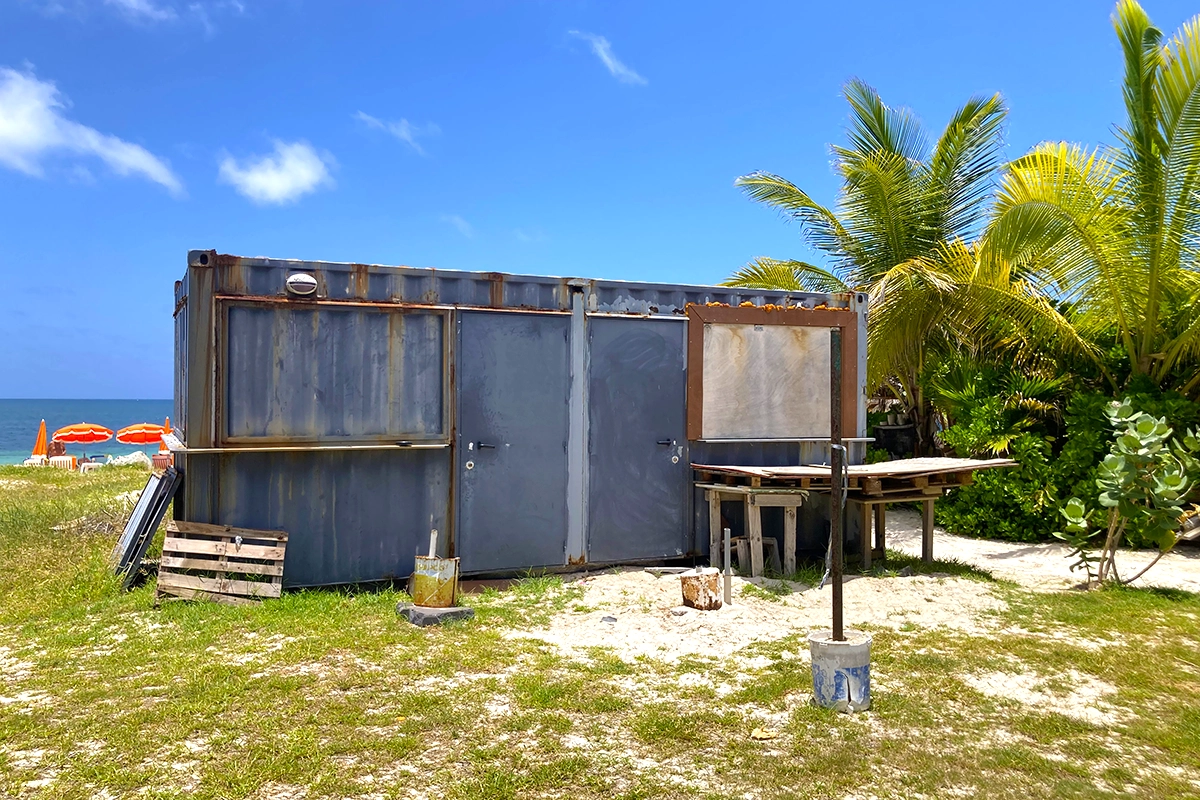
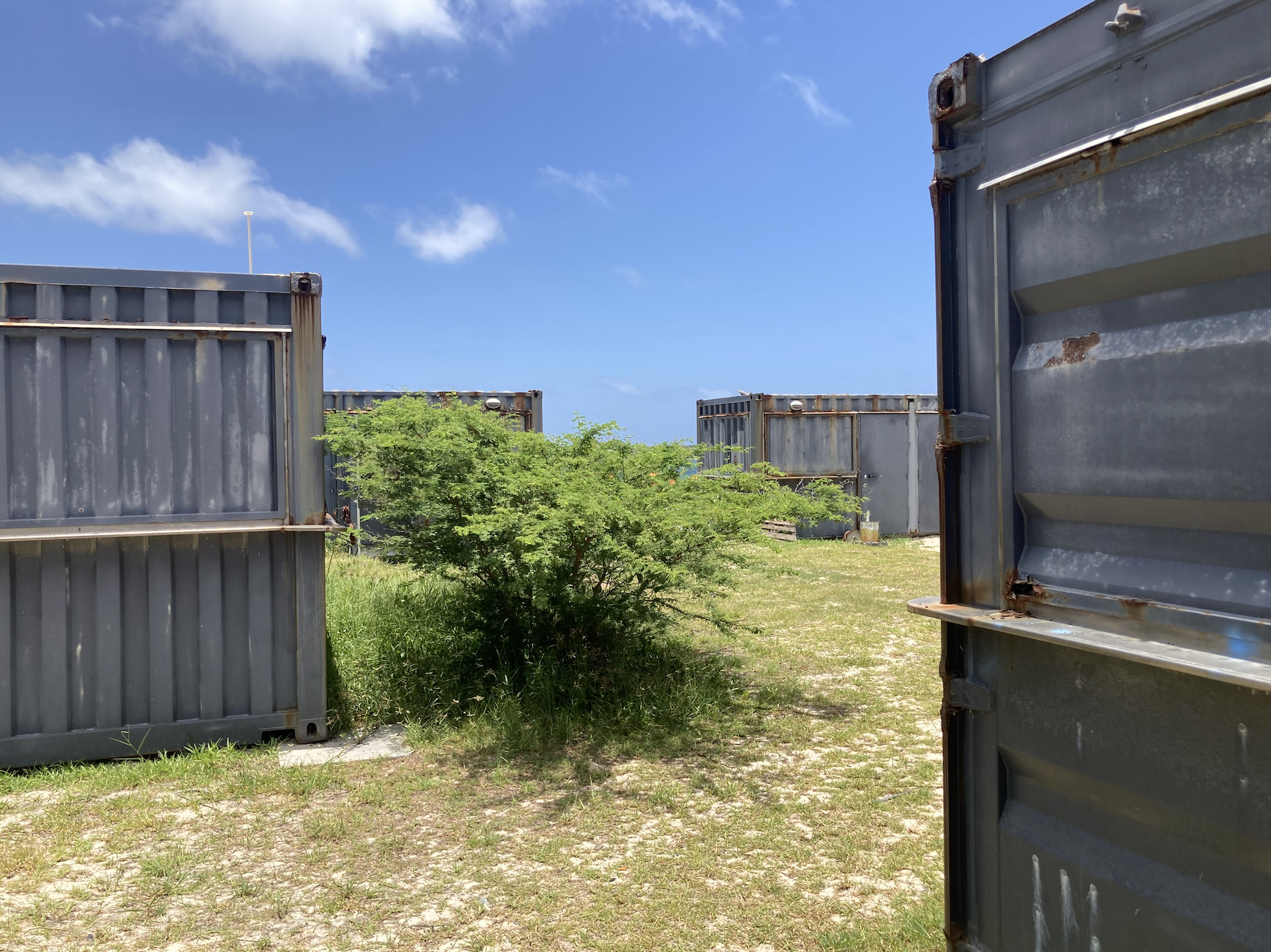
With a little common sense, and above all a genuine spatial planning policy, would it not be possible to regularise the situation by properly accommodating the few operators currently operating illegally in these existing locations?
The Collectivité states that it is currently “engaged in a comprehensive overhaul of the management of its public domain, with the aim of clarifying authorised uses, ensuring fairness among occupants and compliance with the applicable regulatory framework”… While awaiting this major “comprehensive overhaul”, tourists will therefore continue to be greeted by a makeshift setting of tarpaulins, pallets and premium coconuts. An authentic experience, no doubt, but not necessarily the one advertised in the destination’s brochures.