


Earth on Fire: Humanity Facing Up to Its Responsibilities

In Gironde, 42,000 hectares went up in smoke in July alone. Spain is ablaze, Anguilla has just spent several days battling a landfill fire, and the persistent drought has put Saint Martin and Saint Barthélemy under close surveillance. Faced with these disasters, humanity can no longer afford to remain a mere spectator: nine out of ten fires are caused by humans.
Forty-two thousand hectares… that is more than four times the area of Saint Martin, comprising both the French and Dutch parts combined. Forests destroyed, homes under threat, communities evacuated and thousands of firefighters mobilised to tackle fires of exceptional intensity.
Over the past twenty years, the number of fires is said to have increased thirtyfold. These fires are therefore no longer isolated incidents, confined to a few regions traditionally at risk. They are becoming one of the most visible signs of an environment weakened by drought, heat and the drying out of vegetation.
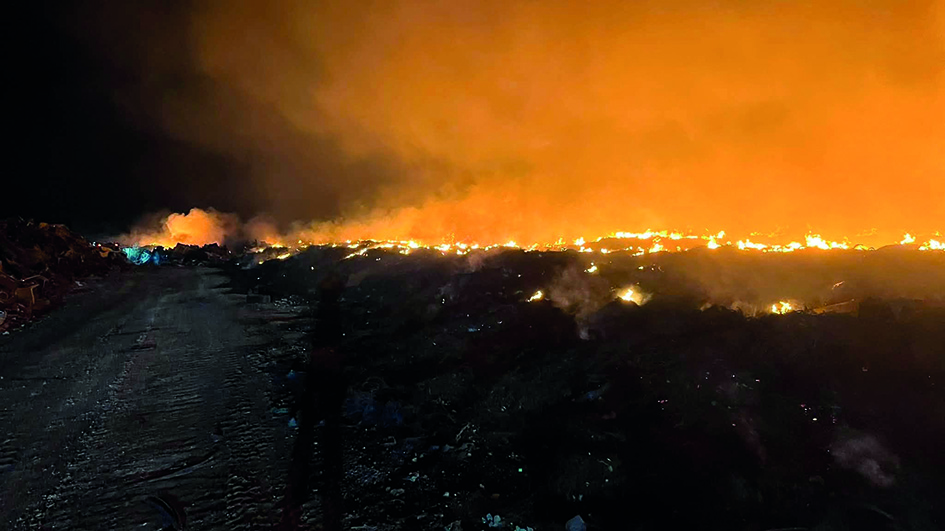
The Caribbean has not been spared. On 25 July, a major fire broke out at the Corito Road landfill site on the south coast of Anguilla. For several days, firefighters battled the flames, particularly in an area where tyres were burning. It was necessary to cover the fire sources with mud, cool down the hotspots and deploy heavy machinery to gradually bring the fire under control. Much of the fire was eventually brought under control, but the smoke continued to affect local residents and businesses.
This incident should serve as a warning. In both Saint Martin and Saint Barthélemy, the persistent drought is turning vegetation into fuel.
Nine out of ten fires can be prevented
If nine out of ten fires are caused by humans, this means, above all, that nine out of ten fires could be prevented. A cigarette butt thrown out of a car window, a barbecue lit in an unauthorised area, garden waste burnt in a garden, or building work producing sparks near dry vegetation can have dramatic consequences. The accumulation of wood, cardboard, plastics, tyres or bulky waste near homes also poses a danger. In the event of a fire, these materials fuel the flames, accelerate their spread and complicate the work of the emergency services.
But human responsibility is not limited to careless actions. It also lies in the way we consume, manage our waste, develop our land and preserve natural spaces. We can no longer be moved by images of devastated landscapes whilst continuing to act as if our habits were without consequence.
Solidarity after the fire, responsibility before
In the face of the fires ravaging the south of France, the President of the Collectivité de Saint-Barthélemy, Xavier Lédée, has announced his intention to propose to the Executive Council the allocation of €20,000 in aid to the Civil Protection service. This contribution is intended to support the volunteers working with the affected communities. This initiative highlights the importance of mutual aid between territories.
But solidarity must not only come into play after the flames have died down. It begins before, through prevention and vigilance on everyone’s part. The Prefecture of Saint-Martin has issued a warning about the drought affecting the territory and reminds the public that it is forbidden to burn garden waste (please use recycling centres and designated facilities), and that work producing sparks and barbecues near dry areas must be avoided: these precautions are not a matter of being overly cautious. They are a matter of civic responsibility.
It is always more spectacular to praise the courage of firefighters than to remind people of the responsibility of those who discard a cigarette butt or set fire to a pile of branches. Yet firefighters should not have to risk their lives because of avoidable carelessness.
The Earth is burning, but it does not always catch fire of its own accord. And whilst changing climatic conditions now make fires more violent and harder to control, the initial spark remains, in the vast majority of cases, in our hands. It is up to us not to ignite it.