



Celebrating whales means protecting them
International Whale Day, celebrated every year on 19 February, is dedicated to the protection and defence of whales. And the subject is far from abstract: these giants of the seas are currently very much present in our waters. Their preservation has become a priority.
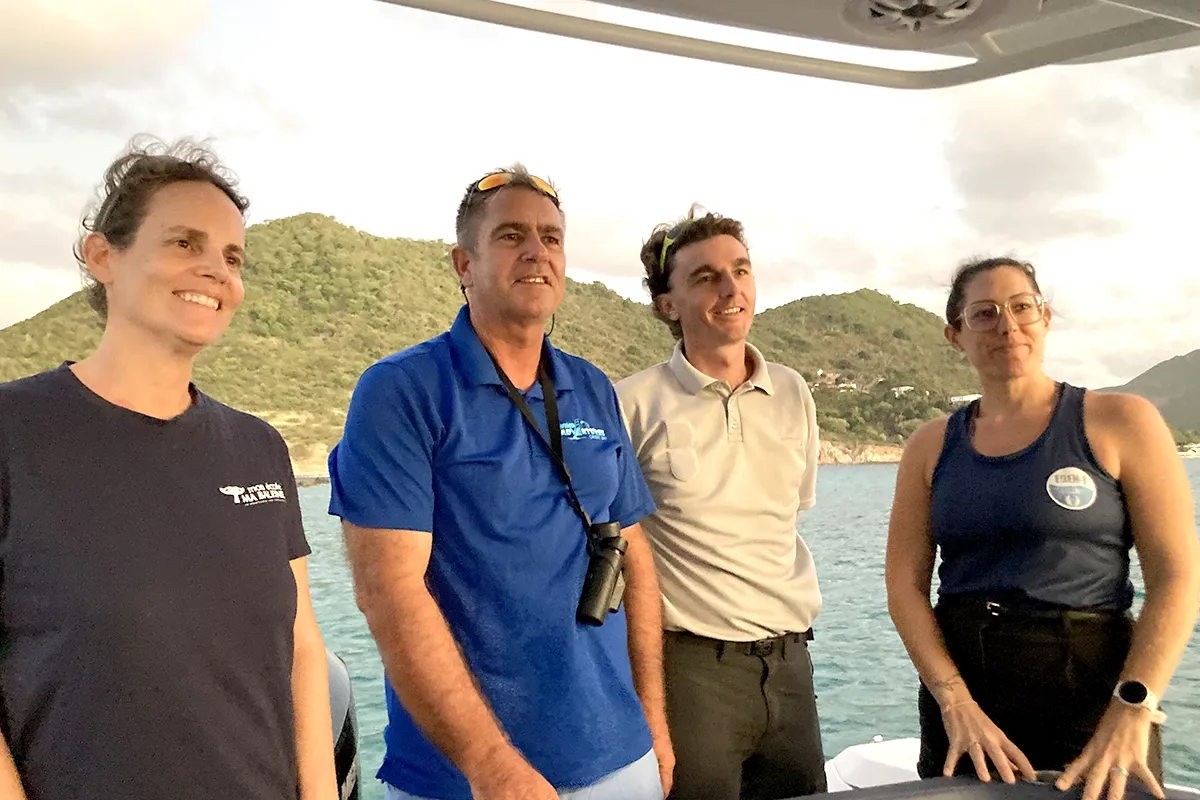
That was the whole point of the Whale Festival organised last Sunday at Orient Bay by the EDEN-I association and WindAdventure, with the participation of Mon École Ma Baleine and AGRNSM (Nature Reserve). The most enthusiastic about the idea of this festival were the children, which bodes well for the future of the planet. They were delighted to be able to take part in the entertainment and activities centred on cetaceans and marine biodiversity. Themed face painting, drawing competitions and, above all, virtual reality headsets allowed them to immerse themselves in the marine world for an afternoon. The adults were able to talk to the various partners present, all of whom are committed to protecting the marine environment. The day ended with a conference at the Théâtre de la Chapelle, addressing cetaceans as well as the regulations in force in the AGOA sanctuary and the Nature Reserve. These are regulations that some tend to ignore in order to profit from the presence of these species in our waters. For while whales are symbols of biodiversity, they have also become real economic players.
Observe, yes, but from a distance
In the West Indies, whale watching generates between $50 and $60 million annually and attracts more than 350,000 visitors. Whale watching has become particularly lucrative in the Dominican Republic and Dominica, where the activity now represents nearly $18 million in annual revenue. The French West Indies are not to be outdone, and the activity is developing in a more or less regulated manner. However, regulations to ensure the sustainability of the activity and, above all, to limit the stress inflicted on cetaceans do exist. In particular, it is forbidden to approach the animals within 300 metres – whether by boat, jet ski, drone, kayak or any other means of navigation – and if the animals approach voluntarily, speed must be reduced.
In Saint Martin, only one operator is currently licensed as a "Whale Watcher", Emmanuel Demanez (Wind Adventure). On the Dutch side, there are no operators. However, the Nature Foundation warns of the dangers of inappropriate intrusions and asks witnesses to protect the tranquillity of these animals by not sharing their coordinates, to prevent crowds of boats and jet skis from rushing to the area. It should be noted that all species of whales and dolphins are protected under the SPAW Protocol (Specially Protected Areas and Wildlife) and the Nature Conservation Decree.
BioWhale: understanding to better protect
It was with this aim of preserving and studying species in mind that the Eden-I association was created, named after a species of whale (the Bryde's whale, Balaenoptera edeni). It is developing the BioWhale project, which aims to fund the preservation and study of humpback whales and other marine mammals around Saint Martin and Saint Barthélemy. The project includes organising scientific missions at sea (photo identification), educational outings for children, public events and the development of participatory science to raise awareness of these species and mobilise the region around their preservation.
You can support the BioWhale project by making a donation (association.edeni@gmail.com). The association needs around €9,000 to fund its scientific missions at sea, improve knowledge about marine mammals, introduce children to marine biodiversity and, more broadly, contribute to the preservation of the oceans – in a context of booming water sports. The goal is to be able to fund three seasons of scientific studies.