
“A place that is as challenging as it is endearing”: Olivier Beaufour looks back on his time in Saint-Martin
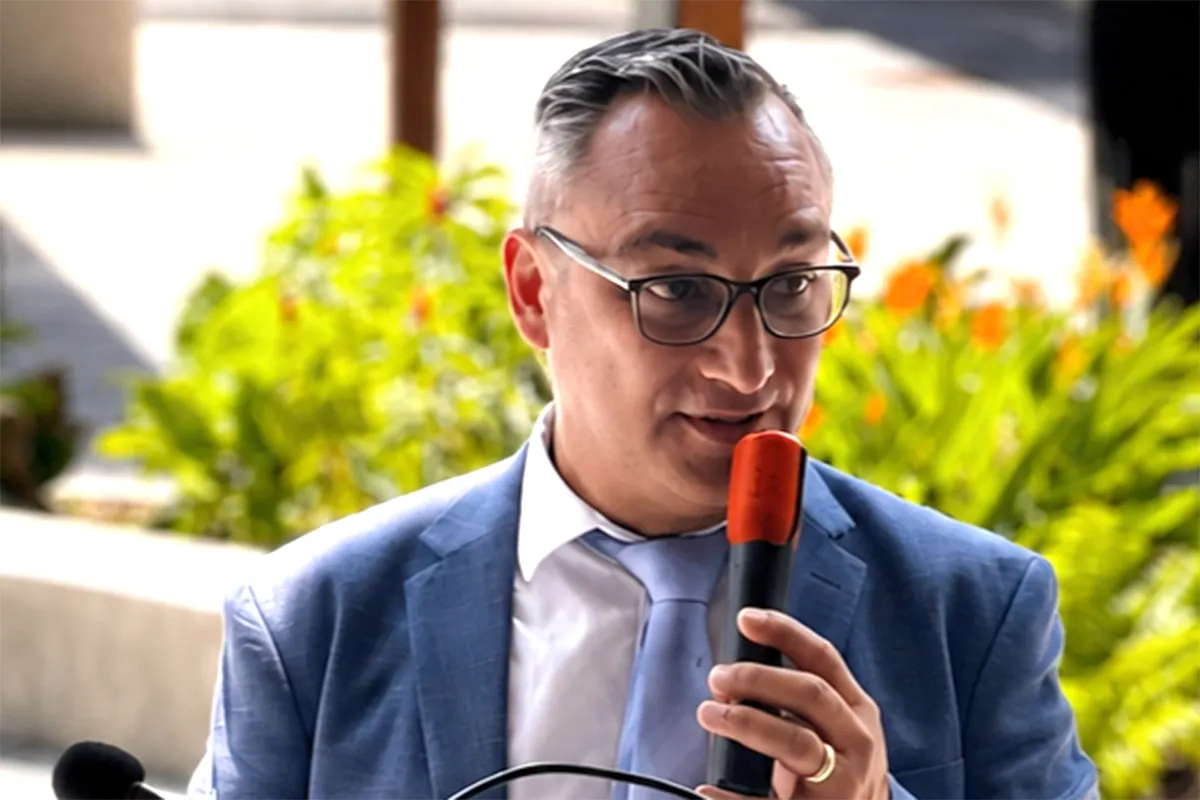
In 2026, the National Education services in Saint Martin are undergoing a revamp. Following the announcement of the new Rector, Nicole Noilhetas, and the departures of Annick Raghouber, headteacher of the Élie Gibs School in Grand Case, Ghyslaine Mussington, an English teacher, and André Botino, a primary school teacher, we met with Olivier Beaufour, an education engineering adviser to the vice-rector, who is also set to leave the territory.
After 23 years in Saint Martin, as he prepares to leave for family reasons, Olivier Beaufour looks back on the projects that have shaped his career, the initiatives that remain unfinished, and the challenges that still lie ahead for the territory.
What stands out for you from your time on the island?
I first came to Saint Martin in 1998 as part of my university research into geopolitics, before settling there permanently in 2003. After working as a headteacher and a specialist teacher for pupils with disabilities, I joined the local education authority within the National Education Department for the Northern Islands. I then held the post of training development adviser to the deputy director of education for Saint-Barthélemy and Saint-Martin. This role involved organising continuing professional development for National Education staff.
Above all, I remember a region that is as demanding as it is endearing. The educational, social and linguistic challenges there are numerous, but above all they reveal tremendous potential. I have always been committed to contributing, with humility and conviction, to developing solutions tailored to the realities of the region. Finally, I shall always remember a deeply committed educational community. Multilingualism, adaptability and resilience are all assets that deserve to be recognised and valued.
What projects have you been involved in?
I have had the satisfaction of spearheading several projects that have shaped the region. Among these, I was notably involved in setting up a class for inclusive education (CLIS) dedicated to pupils with autism spectrum disorders, at the Nina Duverly School, as well as the establishment of adapted general and vocational education classes (SEGPA) in the Quartier d’Orléans. I also initiated the creation of the Cité éducative and led awareness campaigns on the risks associated with screen time.
What projects would you have liked to see through to completion?
Several projects will leave me with a sense of unfinished business. I am thinking in particular of the ‘Campus connecté’, which would have enabled more young people to pursue higher education without leaving the island. I am also thinking of the Experimental Educational Network, a project endorsed by all the institutional partners, which proposed rethinking the organisation of primary schools and developing certain teaching practices to support pupils’ success. I sincerely hope that, one day, the right conditions will be in place for it to be implemented.
In your view, what are the main challenges facing the region in terms of education?
There are still many challenges. The first is to better measure the impact of education policies: it is not a question of multiplying initiatives, but of ensuring that they produce tangible results for pupils and their families. The language issue also remains crucial: promoting the French-speaking world whilst valuing pupils’ own languages and cultures, and aiming for a high level of proficiency in English and Spanish in order to offer them the best opportunities. Finally, schools cannot tackle the region’s challenges alone. Improving families’ living conditions, employment prospects, quality of life and future prospects is also a key driver of educational success. It is by working collectively on these various drivers that the region will be able to fully realise its potential.
Interview by Lise Gaeta