


Reading Plan 2026–2030: Read Better, Succeed Better
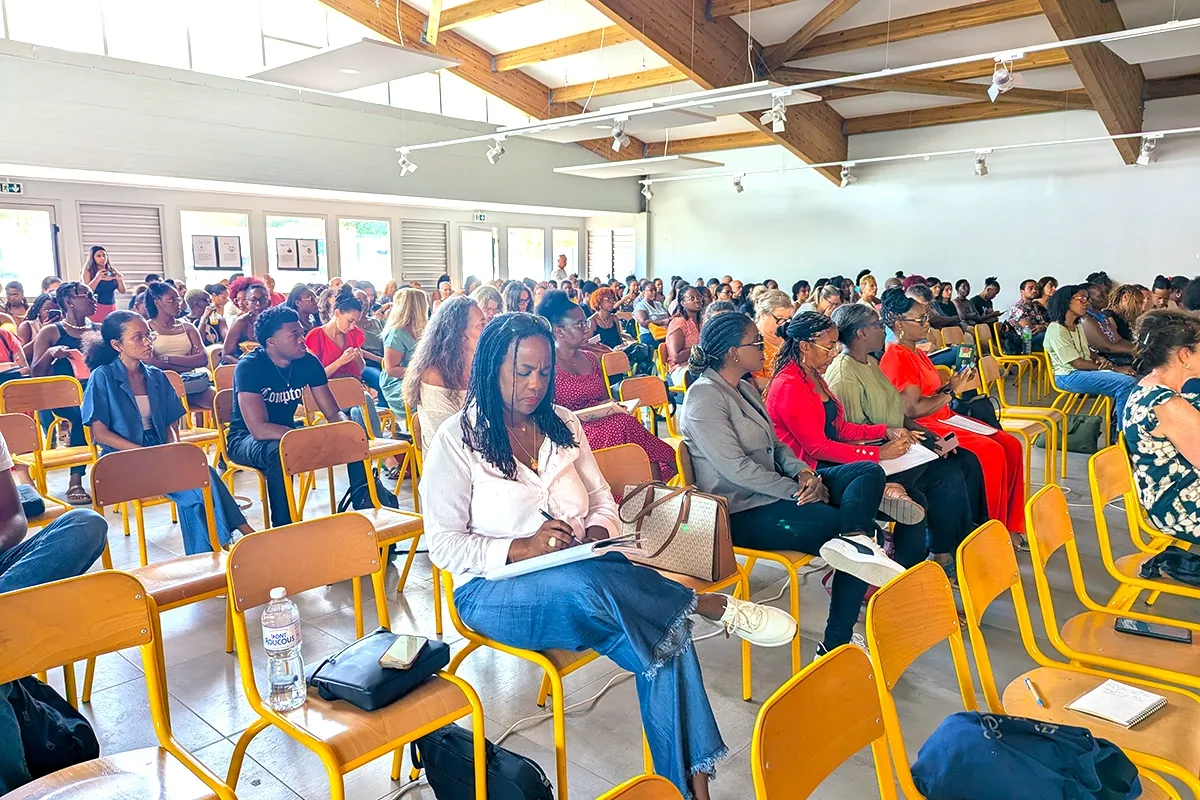
Deputy Vice-Chancellor Fanny Giausseran and Prefect Cyrille Le Vély launched the Northern Islands reading scheme on Wednesday 24 June at the Daniella-Jeffry vocational college. The scheme is designed to improve pupils’ reading comprehension skills.
“Reading is, first and foremost, about learning to speak.” This is how the first conference on the 2026–2030 reading plan for Saint Martin and Saint Barthélemy began. Led by Deputy Headteacher Fanny Giausseran, this educational initiative addresses a worrying trend: “Around 80 per cent of pupils entering Year 6 have difficulties with reading and comprehension,” explains the Deputy Headteacher. This is an alarming situation which leads to difficulties “in all other school subjects, whether it be mathematics or history and geography”. To address this situation, the plan provides for both the roll-out of new reading textbooks for CP and CE1 classes and the training of teaching staff. To this end, Catherine Dorin and Isabelle Goubier, two trainers from Paris, led a conference on teaching reading in a multilingual context. Teachers from the ‘petite section’ to Year 2, headteachers, special needs teachers, parent representatives, local councillors and library staff were involved in this launch. Seminars aimed at teachers of the ‘grande section’, Year 1 and Year 2 are being held following this initial presentation.
Training teachers and supporting pupils
From the ‘petite section’ to Year 6, the aim is to place reading at the heart of pupils’ educational journey. For whilst formal learning takes place in Year 1, the groundwork is laid ‘well before that, through the development of spoken language, lexicon and vocabulary’, argues Fanny Giausseran. Whilst, according to Catherine Dorin, the acquisition of spoken language is a natural process, the acquisition of written language requires structured learning.
Alongside the 2026–2030 Reading Plan, a plan for modern foreign and regional languages will also be implemented, taking into account the multilingualism of families. “We must promote mother tongues, Spanish, Creole and Saint-Martin English. Parents must continue to use these languages at home, but we as a school must also take French and academic English into account so that pupils can master both languages perfectly by the time they reach secondary school,” explains the Deputy Vice-Chancellor. Similar reading programmes, already implemented in Mayotte and French Guiana, are said to have led to significant improvements among pupils. In Saint Martin, this plan has been adapted to local circumstances in order to best address the issues encountered. Although the situation is different on the neighbouring island, this plan is also aimed at schools in Saint Barthélemy.