


Hurricane season: a full-scale exercise to prepare for the event
With the hurricane season having just begun, on Tuesday 2 June Saint Martin hosted a phase of the CARAÏBES-26 exercise organised by the Armed Forces in the West Indies. Held from 17 May to 4 June, this joint, inter-ministerial and inter-allied exercise aims to prepare civilian and military actors to respond to a natural disaster.
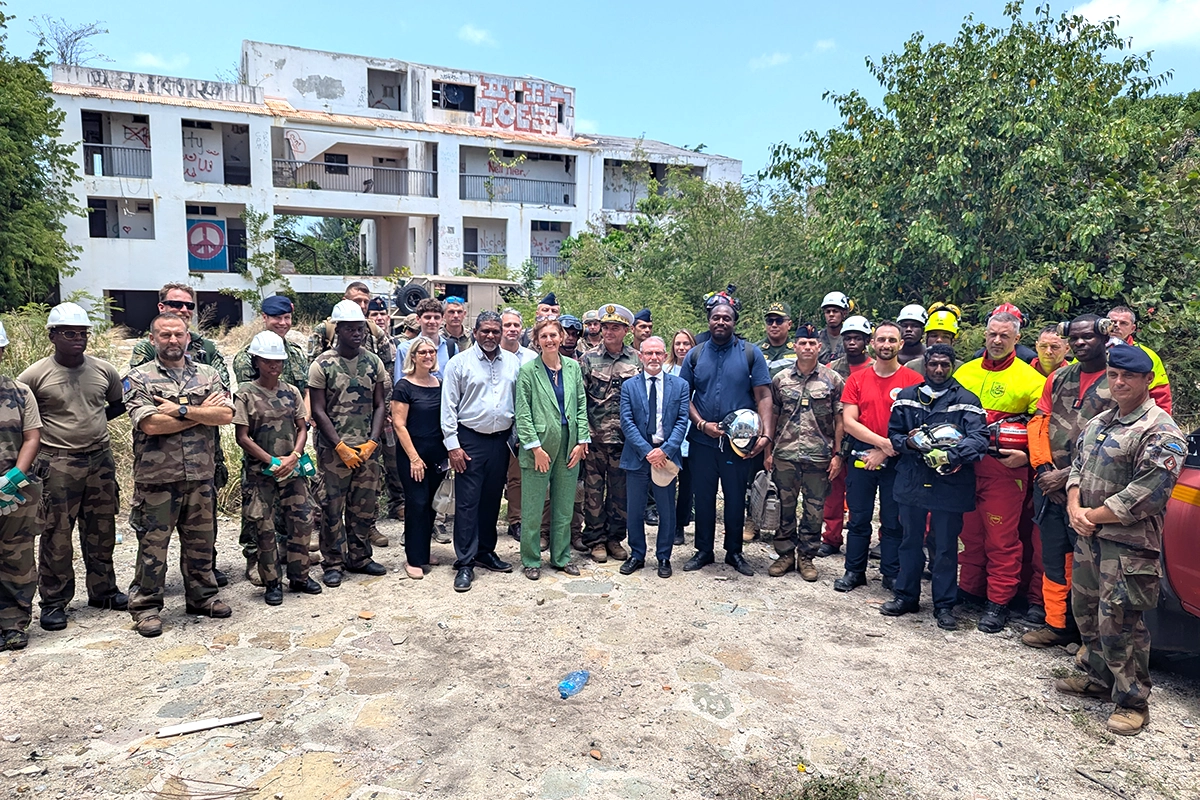
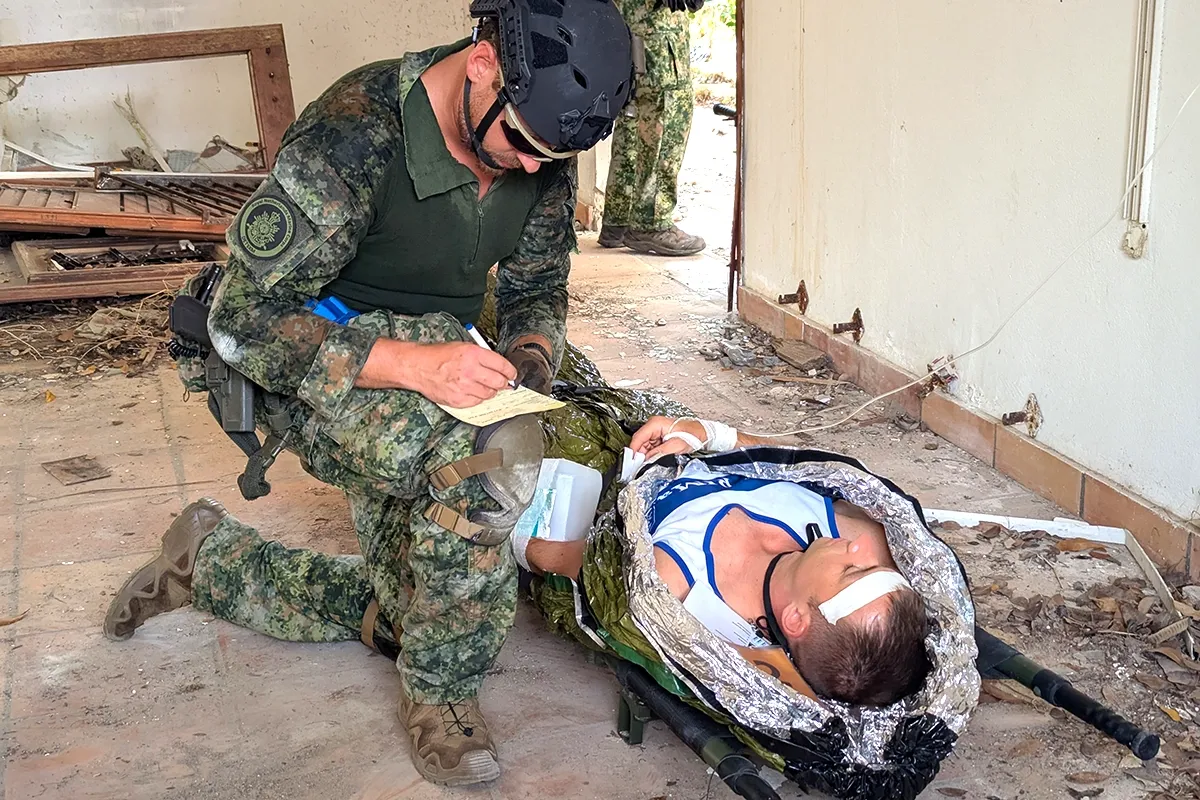
Military and civilian personnel spent five days training in disaster area assessment, victim search and rescue, and evacuations. The scenario played out this week in Saint Martin involved simulating the aftermath of a Category 4 hurricane. Following initial phases of the exercise in Marie-Galante and then in Martinique, this final phase focused on the post-hurricane period.
Operational workshops
The Belle Créole site served as the venue for several operational workshops. The first involved setting up a triage point for victims, enabling them to be prioritised for treatment according to the severity of their injuries. A second workshop, led by young people from the RSMA in Guadeloupe, focused on responding in a heavily damaged area. The teams then had to fight their way through to search for victims. The third, led by the fire service, involved searching for survivors in ‘pockets of life’ and evacuating the injured, including by sea when roads were impassable. Firefighters from Saint Martin, Saint Barthélemy and Guadeloupe, soldiers from the 33rd Marine Infantry Regiment, the RSMA of Guadeloupe, the Red Cross, Civil Protection, the Gendarmerie and foreign partners took part in the exercise.
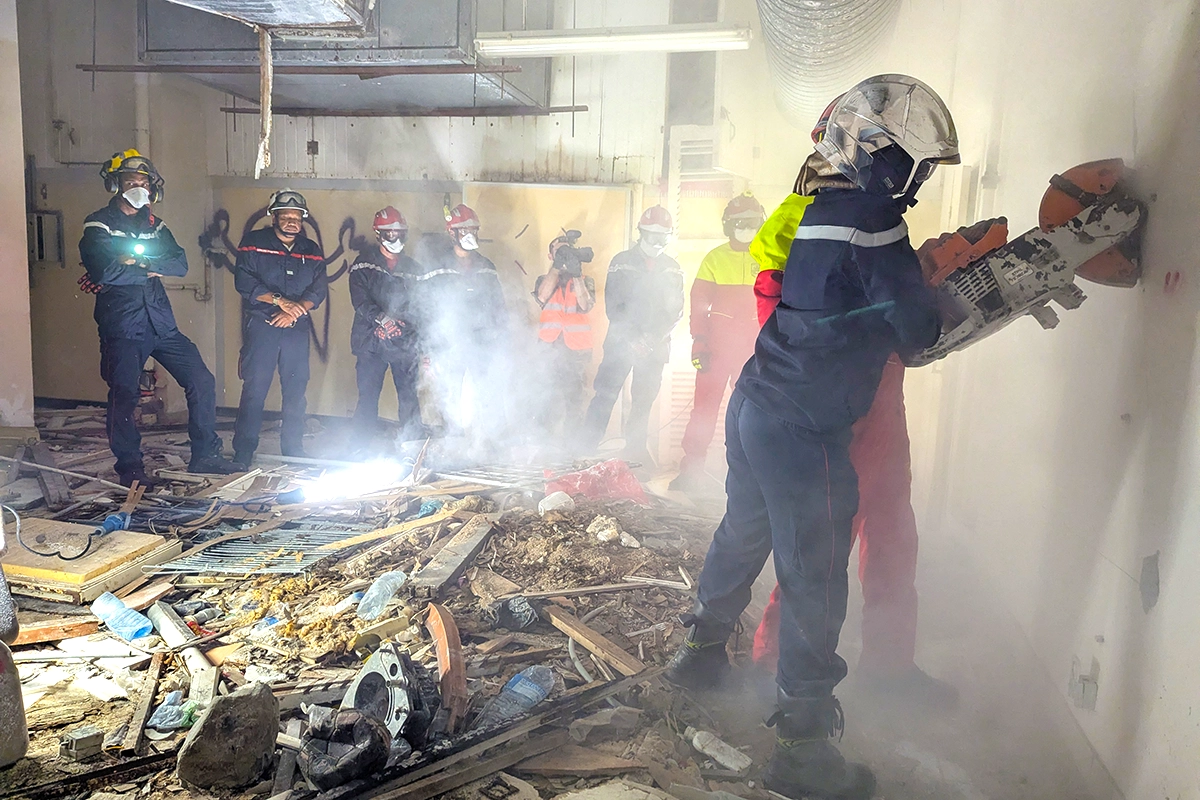
At sea, French vessels, the Overseas Support and Assistance Vessel (BSAOM) Dumont d’Urville and the frigate Germinal, as well as a Colombian frigate, took part in rescue and helicopter winch-hoist manoeuvres. “This mutual training—internal, national and international—is essential in the region, as we are called upon to intervene almost everywhere,” emphasised Commander Benoît Aiglin, representative of the Armed Forces General Staff in the West Indies.
Learning from the past
In Happy Bay, military and civilian disaster relief resources have been deployed. Inside the tents is an advanced medical post, set up by military medical personnel. The French Red Cross has also deployed its resources, providing a reception centre for disaster victims, psychological support and the distribution of essential supplies. “These kits cover the needs of a household of five people for a month in terms of hygiene, sleep, shelter, cooking, cleaning and water storage,” explains Maria-Bonita Amorim Da Silva, coordinator at the French Red Cross. Away from the facilities, a mobile mortuary was also among the equipment deployed by the Civil Security.
For Rear Admiral Jean-Baptiste Soubrier, Commander-in-Chief of the Armed Forces in the Antilles, the exercise is of significant importance, particularly as the territory has no permanent military presence. “It is essential to come here to get to know the terrain and be able to intervene if necessary.”
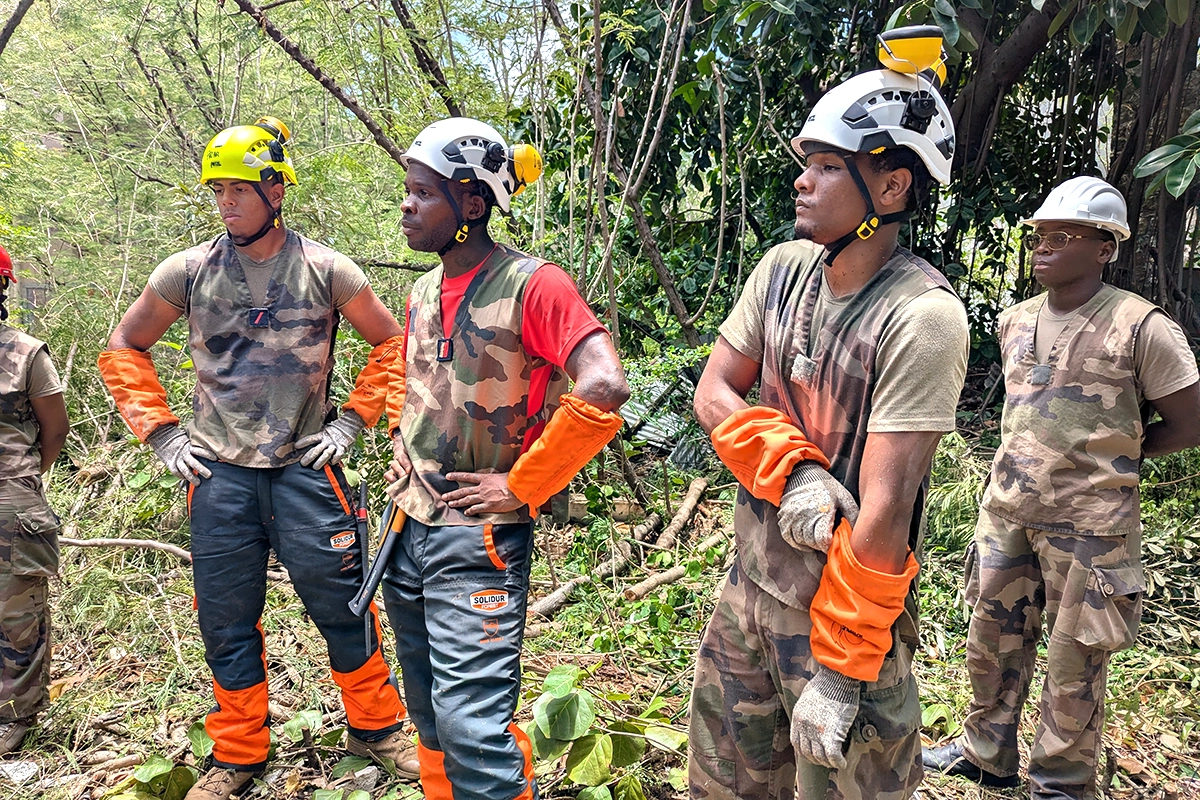
Prefect Cyrille Le Vély, for his part, emphasised the lessons learnt from Irma in 2017, particularly regarding security. “When Hurricane Irma struck, the looting left a deep impression on people’s minds. The Gendarmerie has planned to set up positions in strategic locations before the hurricane, so that such incidents cannot happen again,” he said. In total, nearly 300 people were mobilised for this exercise. Held every two years, it helps to strengthen regional coordination and build on lessons learnt. “Each time, we learn lessons to ensure we are better prepared for when it happens,” summarised Commander Benoît Aiglin. For all the military and civilian personnel present, the objective remains the same: to be ready to respond before, during and after a natural disaster.