



The local authority’s budget: balancing financial constraints with necessary investments
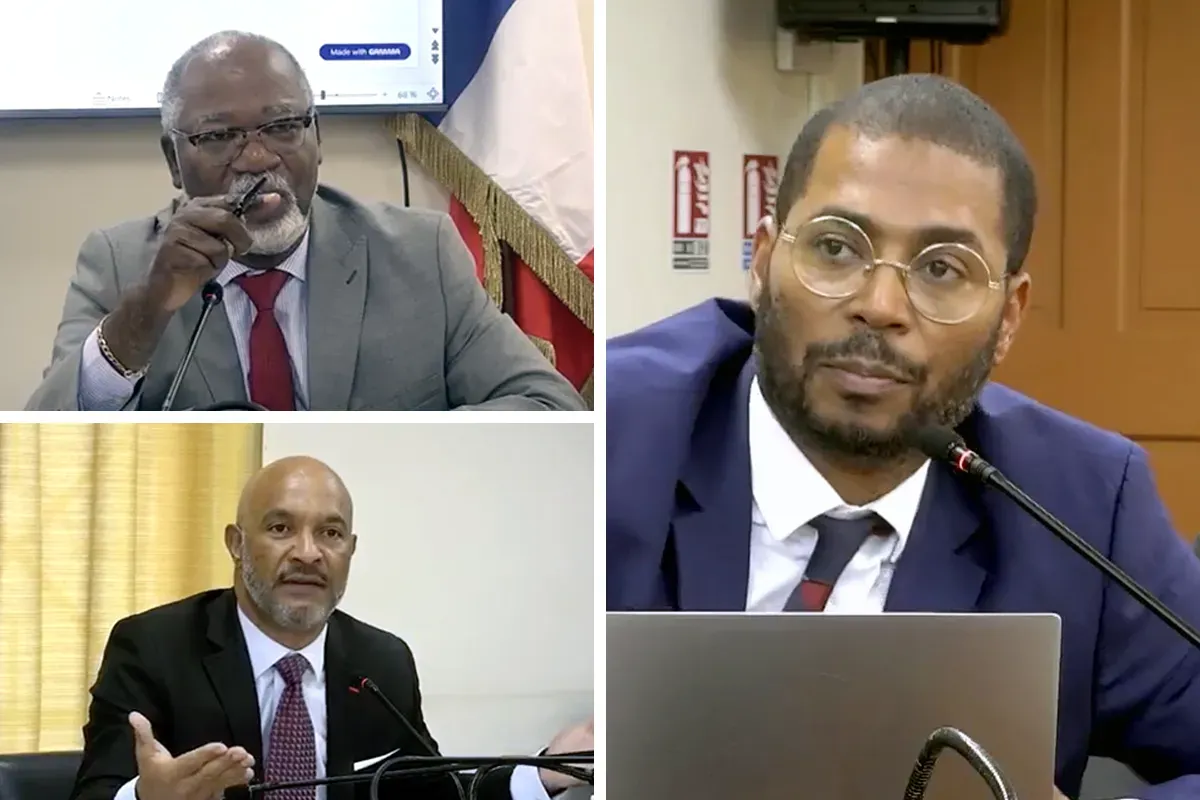
The final full budget of the current term of office amounts to €276.3 million, comprising €170.8 million for operating expenditure and €105.4 million for capital expenditure. It was put to a vote by the Territorial Council on 27 March.
In his opening address, the President of the Collectivité set out the context for this new draft budget, describing it as “particularly constrained” due to an economy weakened by a high cost of living, an almost total reliance on imports, and logistical vulnerabilities that are prolonging supply times… but the President stated that the choices made are fully accepted, whatever the consequences.
A brief and tense debate
The figures presented ahead of the draft budget are not final, as the 2025 accounts have not yet been finalised. Jean-Sébastien Gottin, Deputy Director-General for Financial Affairs, noted, however, that they are lower than those of the previous year, as the Collectivité has drawn on its resources to continue its investments. It has a debt stock of €55 million, but with a 5-year debt repayment ratio still below the warning threshold (10 years). Efforts to control expenditure will therefore still be required in 2026.
Specifically for this year, revenue is falling slightly (–€1.4 million) whilst certain expenditure is rising, notably general administrative costs (+€4.9 million), of which nearly €10 million is for services deemed essential, namely waste collection, sargassum management, and maintenance of the territory. The wage bill has stabilised at €64.1 million, and the council is maintaining its social commitments at €14 million for the RSA and over €34 million for social policies. The schemes run by public institutions with a social or economic remit, grants to associations and the quality of public services cannot be reduced. Financially, gross savings are positive but declining, and the draft resolution already envisages borrowing under the supplementary budget to support the investment programme.
Louis Mussington stated that he had made responsible choices and that every euro was accounted for and every expenditure justified. However, he also stands by other, more criticised decisions, such as Air Antilles, or recruitment. He also announced that senior staff (category A) would soon be recruited again to strengthen engineering and better manage the Collectivité’s skills.
In response to the opposition’s remarks regarding the budget’s lack of transparency, the debate was cut short, moving straight to the vote: 16 in favour, 4 against and 2 abstentions.
Loans pending grants
Prior to the budget vote, elected representatives voted to sign six credit agreements with the French Development Agency (AFD) for a total of €12 million. These pre-financing agreements will enable ongoing projects to be finalised whilst awaiting the disbursement of state grants: refurbishment of the Sandy Ground Youth and Community Centre (€1.4 million), reconstruction of the Quartier d’Orléans secondary school (€3.5 million), upgrading works on the RN7 at La Savane (€4.725 million), renovation of the Concordia media library (€1.435 million), refurbishment of the fire station (€315,000) and greening of school grounds (€796,000). These €12 million will be injected into the cash flow and will not appear in the budget nor will they be recorded in the accounts, stated the Director-General of Services, “as this is a cash flow operation rather than a budgetary one”.
The question was raised on several occasions by Philippe Philidor: what is the actual cost of this pre-financing when fees and interest are included? Indeed, whilst the amount of the set-up fees (€61,000) is fixed, the variable-rate interest remains unknown. Jean-Sébastien Gottin acknowledges this, saying, “we haven’t done these calculations; it will depend on the repayment period”.
This uncertainty was highlighted by the entire opposition, which is concerned that the Collectivité is committing to pre-financing arrangements whose costs it cannot control. These arguments were rejected by the President, who brought the debate to a close by accusing the opposition of already being in campaign mode, and proceeded directly to the vote. All the resolutions were adopted by a majority.