



Systemic inequalities in the overseas territories: a new Senate select committee
A systems approach is a way of understanding a phenomenon by viewing it as a whole in which everything is interconnected. Each element influences the others, and it is by analysing these interactions that we can understand how the system functions as a whole. A Senate inquiry has decided to address overseas issues using this approach.
In January, the Senate set up a committee of inquiry into the systemic inequalities faced by the overseas territories, with a view to addressing social and sustainable development challenges. Since 12 February, hearings have been taking place in quick succession, and the committee has already held 25 plenary hearings. Only two territories are being visited by the committee: Martinique and Saint Martin.
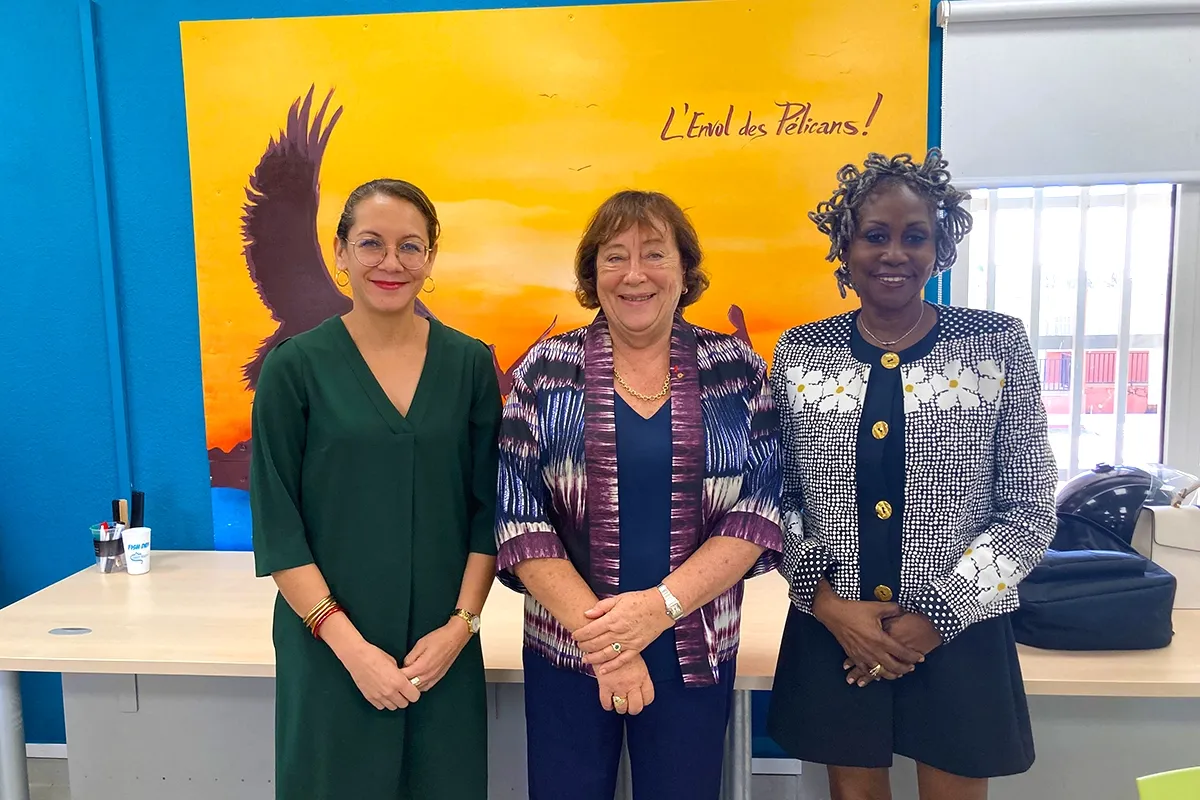
Viviane Malet, chair of the committee of inquiry (Senator for Réunion – Les Républicains group), and Evelyne Corbière Naminzo, rapporteur (Senator for Réunion – Communiste Républicain Citoyen et Écologiste - Kanaky), accompanied by Annick Pétrus, Senator for Saint-Martin and Vice-Chair of the committee, met with several stakeholders in the territory to gather data on topics such as education, training, employment, health, transport and housing
Why this review?
For several years now, the overseas territories have been governed by a succession of economic, social and climate crises. From a distance, the State struggles to implement public policies capable of sustainably reducing inequalities that persist, or are even worsening. Indicators on income, poverty, access to essential services and school dropout rates confirm this observation, despite the catch-up policies put in place.
Against this backdrop, the committee of inquiry intends to go beyond mere diagnosis and analyse the root causes of these failures: lack of resources, limitations in the design of public policies, or a lack of effectiveness. It will also ensure that the specific realities of each territory are taken into account, whilst questioning the relevance of a model modelled on mainland France.
The commission’s objective is therefore to gain a better understanding of these dynamics in order to propose appropriate solutions. The subject matter is extremely broad, but this is precisely the point of this review, which aims to demonstrate that everything is interlinked and that no single issue can be resolved in isolation.
Challenges and objectives in Saint-Martin
The mission therefore conducted its visit using a cross-cutting approach to the territory’s issues. It began with a section dedicated to education, including a visit to Soualiga secondary school and discussions with the deputy headteacher and the teaching staff. It continued at the Mission Locale, alongside its president, Raphaël Sanchez, focusing on the challenges of youth employment and integration. The closely linked issues of employment and housing were also discussed with the prefect, whilst the health component involved a visit to the hospital and a meeting with the ARS. In a territory as unique as Saint Martin, a meeting with the government of Sint Maarten was a natural step.
In all these issues, young people are a priority; from early childhood to higher education, in a context marked by stagnation and a persistent gap with mainland France, the challenge is to identify the most effective levers to reverse these trends.
As the hearings progressed, other themes were added, such as mobility, health prevalence rates, healthy life expectancy (figures that exist in mainland France but not for the overseas territories) and infant excess mortality, which has never been taken into account until now and for which the cause is unknown. Without this data, it is difficult to define appropriate public policies and resources.
But whatever measures are put in place, they will only be effective if the powers of the State and the local authorities are pooled. Today, we can no longer think in silos; we must provide a comprehensive response to disadvantaged regions, where everything costs more. The commission of inquiry will publish its report at the end of June, containing cross-cutting proposals. As Senate commissions of inquiry are multi-party bodies, it will then be up to each senator to defend the report within their own group.