



The Justice System and Drug Trafficking
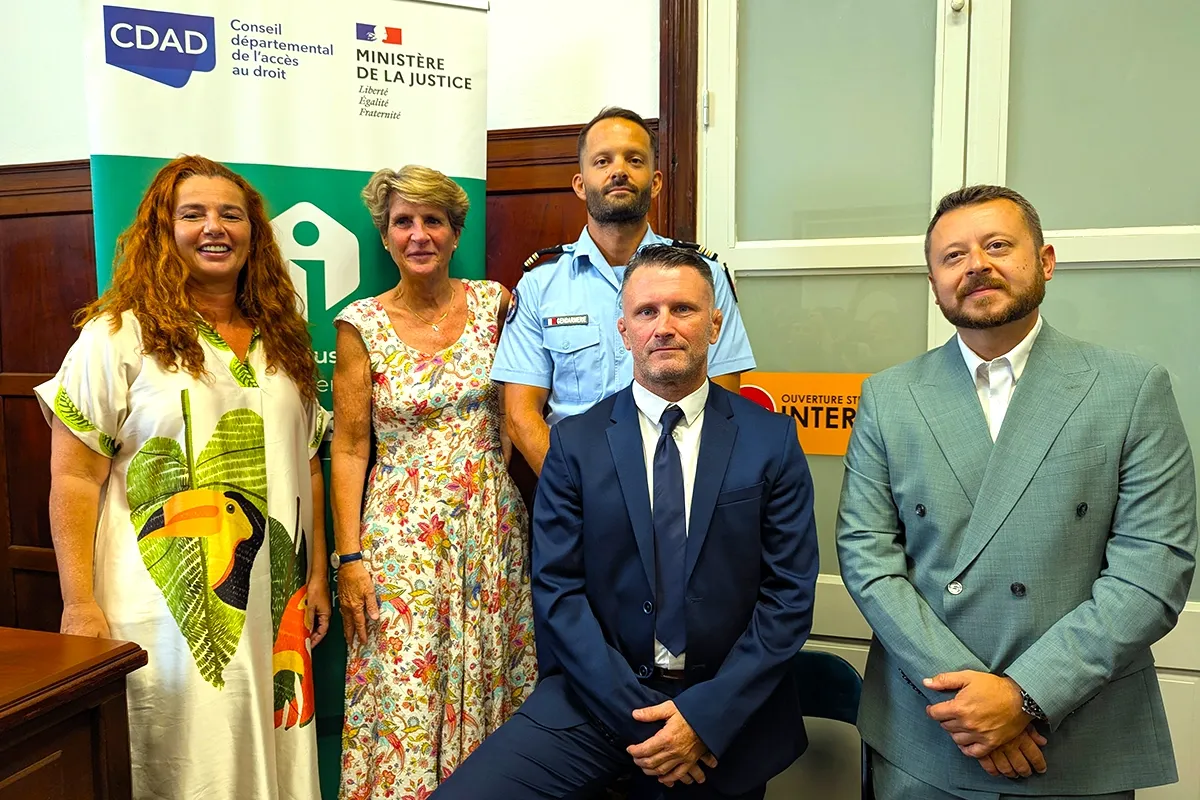
To mark National Access to Justice Day, a conference on drug trafficking was held on 22 May at the local court in Saint-Martin. The event was attended by Christine Saunier-Ruellan, an honorary magistrate and former investigating judge in the ‘Air Cocaïne’ case.
Drug use is skyrocketing in France, particularly cocaine use. With global production on the rise and criminal organisations becoming increasingly sophisticated, the country is becoming both a consumer and a transit hub. A veritable ‘white tsunami’, this wave of illegal trafficking is being fuelled by cartels seeking to flood the European market.
“A veritable scourge”
In Saint-Martin, the situation has its own particular characteristics. The proximity to other islands makes international police and judicial cooperation essential. Traffickers use speedboats, smugglers, suitcases, clothing impregnated with cocaine, or even “mules”. It is a veritable game of cat and mouse because, as Eric Poulcallec, representative of the Anti-Narcotics Office, explains, traffickers “have networks everywhere; they have accomplices everywhere”.
Beyond the trafficking itself, the magistrates emphasised the human and social consequences of this phenomenon. Drug trafficking fuels violence, gang feuds, corruption and money laundering. It also draws in minors, sometimes very young ones, into networks that exploit their vulnerability. “Drug trafficking is a veritable scourge (...) that destroys everything! Health, the individual, the family, education,” protested honorary magistrate Christine Saunier-Ruellan. A statement that sounded like a warning, as several pupils from Mont des Accords secondary school were present at the conference. The magistrate also spoke of her work as a judge in the so-called “Air Cocaine” case. In 2013, 700 kg of cocaine were seized at Punta Cana International Airport in the Dominican Republic, on a private jet operating flights between France and the Americas, with stopovers in Saint Martin.
“The party is over”
The Deputy Public Prosecutor, for her part, delivered a clear message: “In Saint Martin, the party is over for drugs.” The judicial response is intended to be firm, with penalties of up to ten years’ imprisonment and up to twenty years in the event of a repeat offence. The law of 13 June 2025, mentioned during the conference, also strengthens the tools for combating organised crime. But the speakers also emphasised that the justice system cannot act alone. In Saint Martin, as elsewhere, the challenge goes beyond law enforcement.
The priority today is to protect young people and public health in the face of a criminal economy that destroys as much as it enriches.