

Neighbourhood Olympics: sport and community spirit
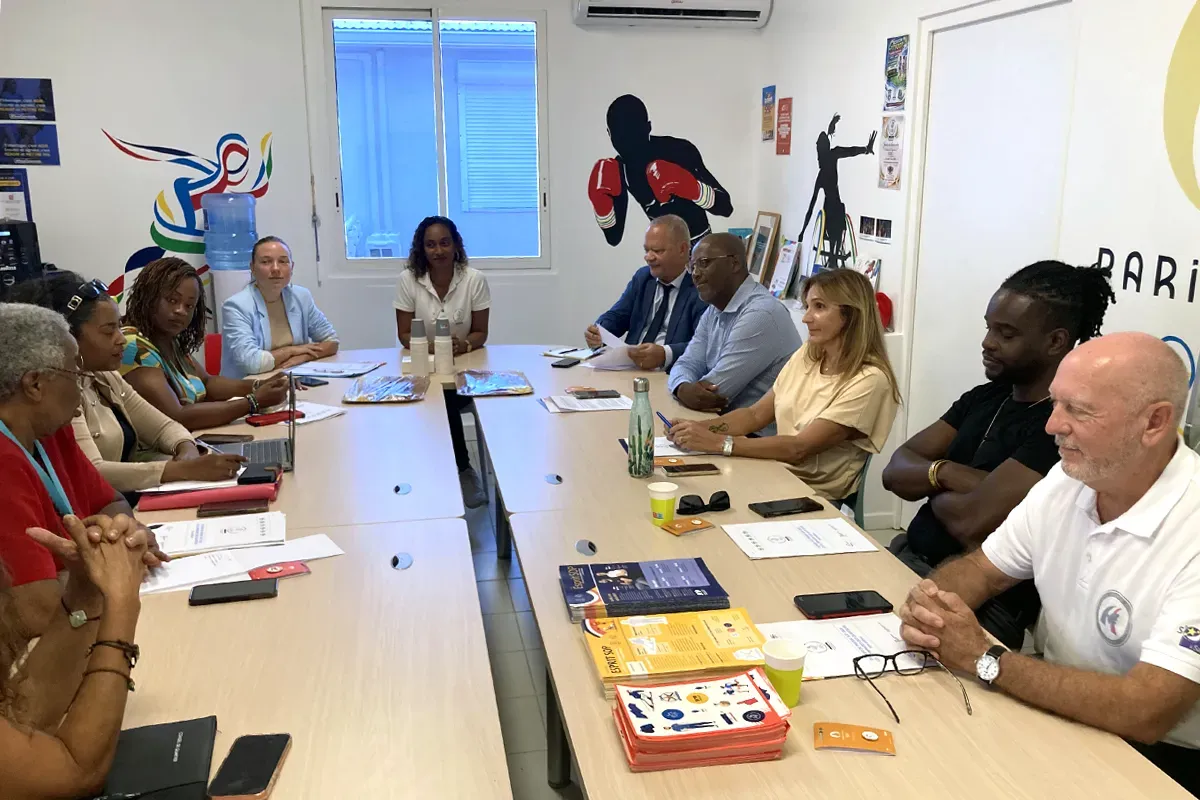
The Saint-Barthélemy and Saint-Martin Territorial Olympic Committee (CTOS) officially announced last week the launch of the first edition of the Neighbourhood Olympics. This groundbreaking event is intended first and foremost as a tool for social cohesion, in response to persistent tensions among young people in the territory.
The project is led by the CTOS, with support from the French Ministry of Education, the local authority and the State, in collaboration with the neighbourhood councils and the Saint-Martin Cycling Committee. Whilst the aim is to encourage young people to take part in physical activity, the project forms part of a wider initiative focused on prevention and raising awareness. “Sport is a key driver of cohesion, inclusion and education,” said Virginie Carrien, president of the CTOS, who wishes to pass on the values of Olympism to local young people: respect, friendship, commitment, pushing oneself to the limit, as well as tolerance and team spirit.
empowering young people
Following on from the Conference on Youth Violence, “living together is the first thing to instil”, according to the Vice-Chancellor. This groundwork undertaken with the institutions, which has helped identify worrying realities, called for action, as there is an urgent need to rebuild connections, restore a sense of direction and, above all, empower young people, insists Harry Christophe, in order to curb, in particular, acts of violence and anti-social behaviour that are becoming increasingly common in schools but also at sporting events. This view is shared by the sub-prefect, Marie-Hildegarde Chauveau, for whom these games can serve as a tool to “help them embark on this path of citizenship, living together, respect, discipline, integration into a group and encounters between young people from different neighbourhoods .”
The aim is to eliminate rivalries and foster a shared sense of belonging to Saint-Martin as a whole, rather than to individual neighbourhoods. The desire to create a dynamic region where sport is at the heart of neighbourhood life is also in line with the Collectivité’s vision, as stated by Marc G. Ménard, territorial councillor responsible for sport at the Collectivité and president of the CEES.
8 May: between remembrance and sporting commitment
The Prefect was keen to see young people given a greater role in commemorative ceremonies. The idea is therefore to continue along this path. The neighbourhood councils and associations are tasked with selecting the 60 young people who will take part in this first edition – five girls and five boys per neighbourhood – with a focus on diversity: four children aged 10 to 12, three secondary school pupils and three sixth-formers, with particular attention paid to those who are usually on the sidelines.
This first edition will take place on 8 May, as part of the Languages, Arts and Culture Festival.
It will begin with the young people taking part in the 8 May commemorative ceremony, including a discussion with the emergency services – gendarmerie, police and fire brigade – to ‘put a human face’ on these organisations and encourage dialogue. Together, they will then cycle to Sandy Ground. The activities will take place in the car park of Jérôme Beaupère School, which will be secured for the occasion, for the running section, and within the grounds of Aline Hanson School for the cycling section, featuring several skill and agility workshops. This part will be run by the SXM Road Safety Association, which will organise a workshop in advance on 29 April at Mont des Accords secondary school. They will get to know each other and work together for an hour and a half; “we’ll discuss road behaviour on two wheels, make them aware of how to ride a bike or motorbike safely, and the necessary equipment,” explains its president, Bruno Ravier.
The Collectivité has already ordered a dozen bicycles to make available to those who do not have one. Furthermore, the two cycling associations in Sandy Ground have also said they are ready to provide some. The day will conclude with a social gathering, once again to encourage integration and interaction between young people from different neighbourhoods, over a meal provided by the CTOS (Territorial Fund for School Activities).
As we can see, sport serves as a pretext for young people to meet, interact and realise that living together harmoniously can be a positive experience. This is creating a new dynamic, and from next year, the 2nd Olympiads will be organised in a different neighbourhood and will feature other activities.