
Organ donation: a debate to break down taboos
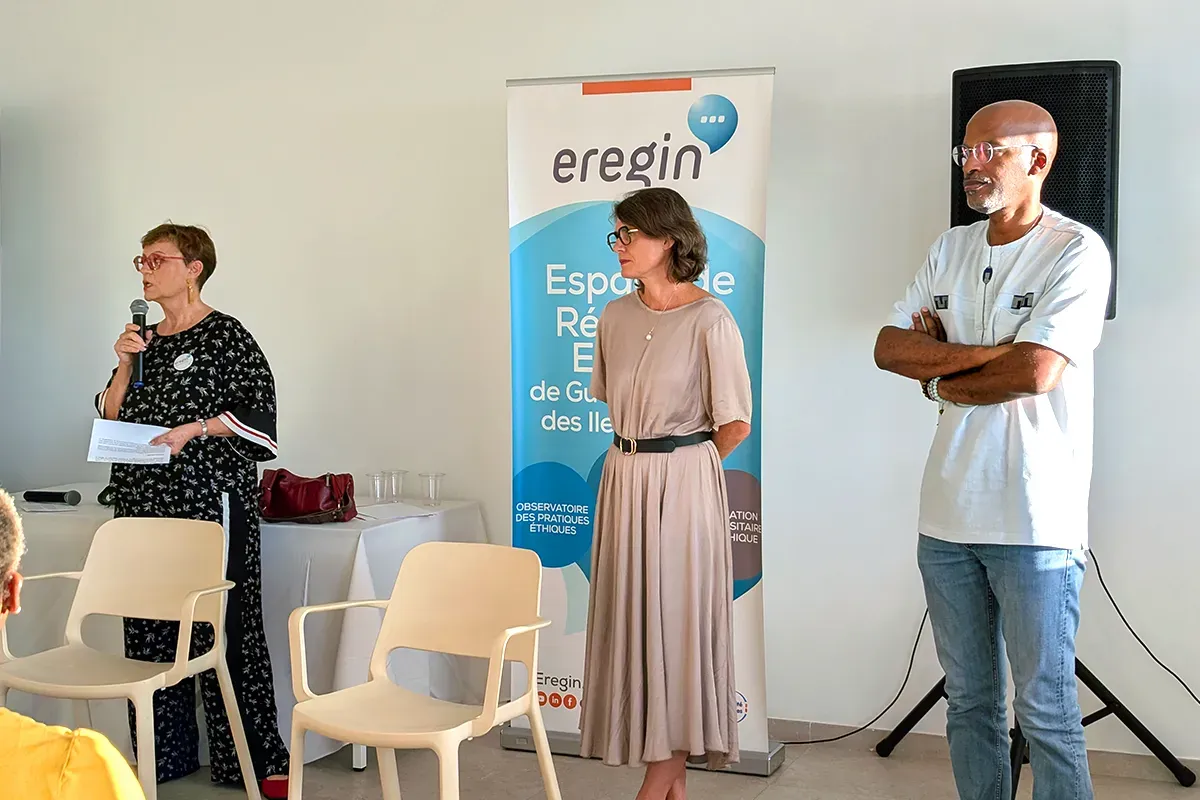
On Wednesday 1 April, an information session on organ donation was held at the Wataki Clinic. The event was open to the public and led by healthcare professionals.
Representatives of the Ethical Reflection Group for Guadeloupe and the Northern Islands (EREGIN) have taken on the challenge of exploring health issues through the lens of organ donation. For nearly two hours, the public had the opportunity to discuss the issue with Dr Pascale Piednoir, an anaesthetist and intensive care specialist; Dr Roland Lawson, an intensive care specialist and head of hospital coordination for organ donation; and Corinne Sainte-Luce, deputy director of EREGIN.
In Saint Martin, cultural and religious barriers remain significant and reluctance towards organ donation persists. Furthermore, the dual insularity complicates procedures. Only kidney donation is possible, and the removal must be carried out in Guadeloupe. Once the operation has been performed, the repatriation of the deceased’s body is then the responsibility of the families.
Pascale Piednoir then cites the example of French Guiana, where the only retrieval centre is in Cayenne. People living in Saint-Laurent-du-Maroni who wish to donate their organs upon their death can be accompanied by three family members, and the hospital then arranges for the body to be returned. For the time being, no similar arrangements have been put in place in Saint Martin.
Saving lives
During the debate, speakers reiterated the three key principles of organ donation: presumed consent, voluntary donation and anonymity. Under the law, since 2023 everyone is presumed to be a donor, unless they have expressed a refusal during their lifetime or are registered on the national opt-out register. Furthermore, no organ removal takes place without the consent of the deceased’s relatives. Today, donations remain insufficient and do not meet the needs of patients awaiting transplants.