


Hospital: for better or for worse
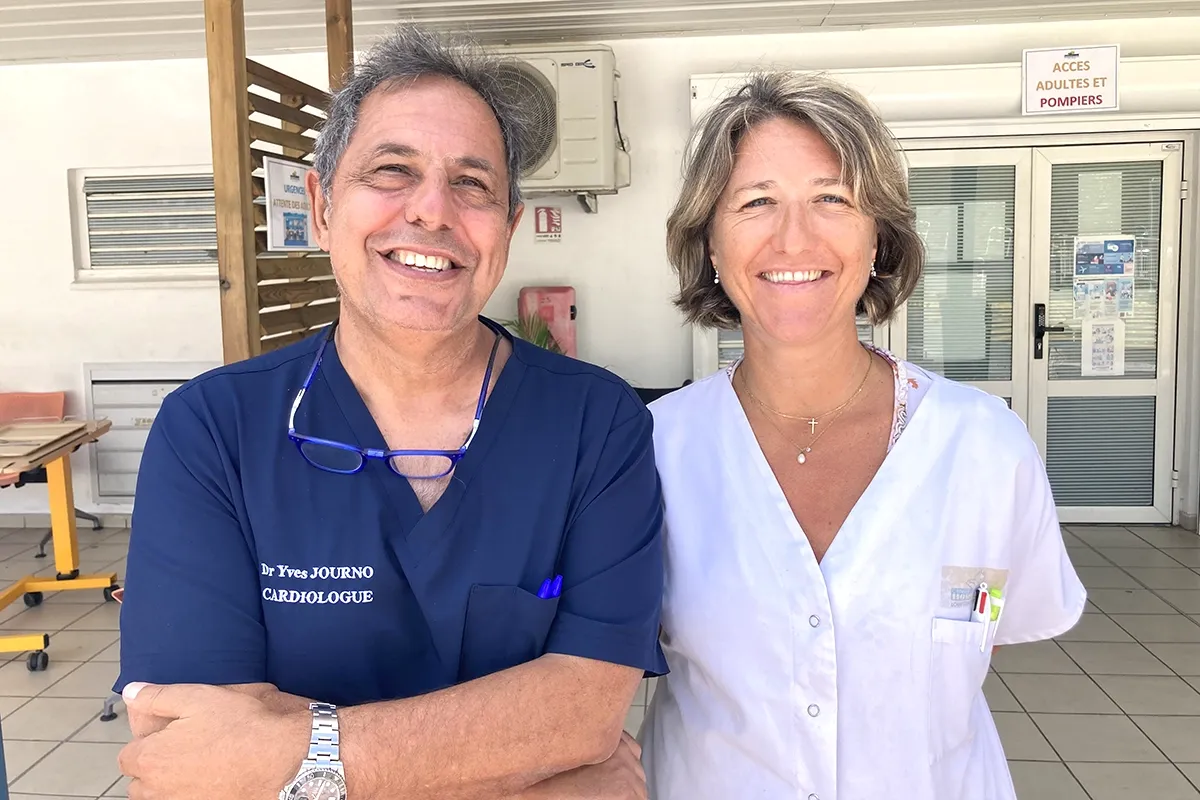
Nursing staff and support staff across several departments at the hospital are struggling to cope. Problems are mounting and a sense of unease seems to be spreading throughout the Louis Constant Fleming Hospital, which still lacks any real leadership to this day. Despite everything, some innovative projects are emerging on the initiative of several healthcare workers, including Dr Yves Journo.
There has been a great deal of criticism of the hospital’s management, particularly on social media, some of it well-founded and some less so, and this is exacerbated by a lack of governance. Dr Yves Journo, a cardiologist working at the hospital, remains optimistic and reassuring, however. “The Louis Constant Fleming Hospital remains a good hospital, one in which local residents can have confidence, as the healthcare teams are doing a remarkable job, even though conditions are currently difficult. The A&E department is, in fact, one of the few in France where the public and private sectors collaborate, enabling a virtually permanent cardiology presence and thus rapid management of cardiovascular emergencies as well as immediate diagnosis, backed by technical facilities offering access to a CT scan within timeframes that remain exceptional for a French hospital.”
Dr Journo draws on his personal experience: “I treat many American and Canadian patients, and I regularly hear some of them say, ‘I had to come to Saint-Martin for my condition to finally be diagnosed’.” The same is true of tourists from mainland France, who make the most of their stay to undergo medical examinations. For Dr Journo, these accounts reflect a simple reality: despite the criticism, the hospital now has competent teams, state-of-the-art facilities and a genuine drive for development serving the people of Saint Martin.
The cardiologist’s aim is now to offer new care pathways, in the day hospital, to tackle health issues that are particularly prevalent in the region: stroke, diabetes and obesity.
Two unique projects will be launched in the autumn with the support of the medical teams, and in particular Emmanuel Bard, a hospital pharmacist, and Dr Pascale Famy, a specialist in diabetology, metabolic diseases and sleep disorders.
High blood pressure and stroke
In France, one in three adults suffers from high blood pressure and around 140,000 people suffer a stroke each year. Stroke is the third leading cause of death and the leading cause of disability. In Saint Martin, five to six people are affected each week. In the majority of cases, high blood pressure is to blame. Often undiagnosed or inadequately treated, this condition remains difficult to manage as many patients do not adhere to their treatment, as high blood pressure is painless. Under this scheme, anyone identified will be referred to hospital for comprehensive care, including therapeutic education, regular blood pressure monitoring and close follow-up to verify the actual effectiveness of treatments.
Obesity and diabetes
18% of the adult population is obese and 30.7% is overweight. Globally, obesity among adults has more than doubled since 1990 and has quadrupled among children and adolescents. New, particularly effective treatments now exist, but their cost makes them difficult for everyone to access. The aim is to improve access to these treatments, which will represent a major public health advance for the region.
The future care pathway will be based on comprehensive care and support. Once a week, patients will receive injections and monitoring of their quality of life, sleep, as well as their cardiovascular and musculoskeletal health, alongside dietary guidance and tailored physical activity. Cookery workshops will be held within the hospital itself, and patients will be accompanied on shopping trips to learn how to plan their daily meals more effectively. This is a first for French hospitals and, given the figures, could set a precedent. The project will be presented to doctors from 1 to 3 July, and a communication campaign will be launched in September to raise public awareness. Everything is now ready. All that remains is to coordinate the various stakeholders to enable the implementation of this new hospital initiative. Support has also been sought from the Regional Health Agency (ARS).
Despite structural difficulties, the lack of stable leadership and staff who are sometimes at their wits’ end, these projects demonstrate a commitment to moving the hospital forward, driven above all by the daily dedication of healthcare workers and staff. For behind the tensions and shortcomings that have been highlighted for months, many professionals continue to keep the hospital afloat, often at the cost of growing exhaustion in certain departments. This is a worrying reality to which we will return in a future edition.