


Environmental competence: a necessary form of autonomy or an additional risk?
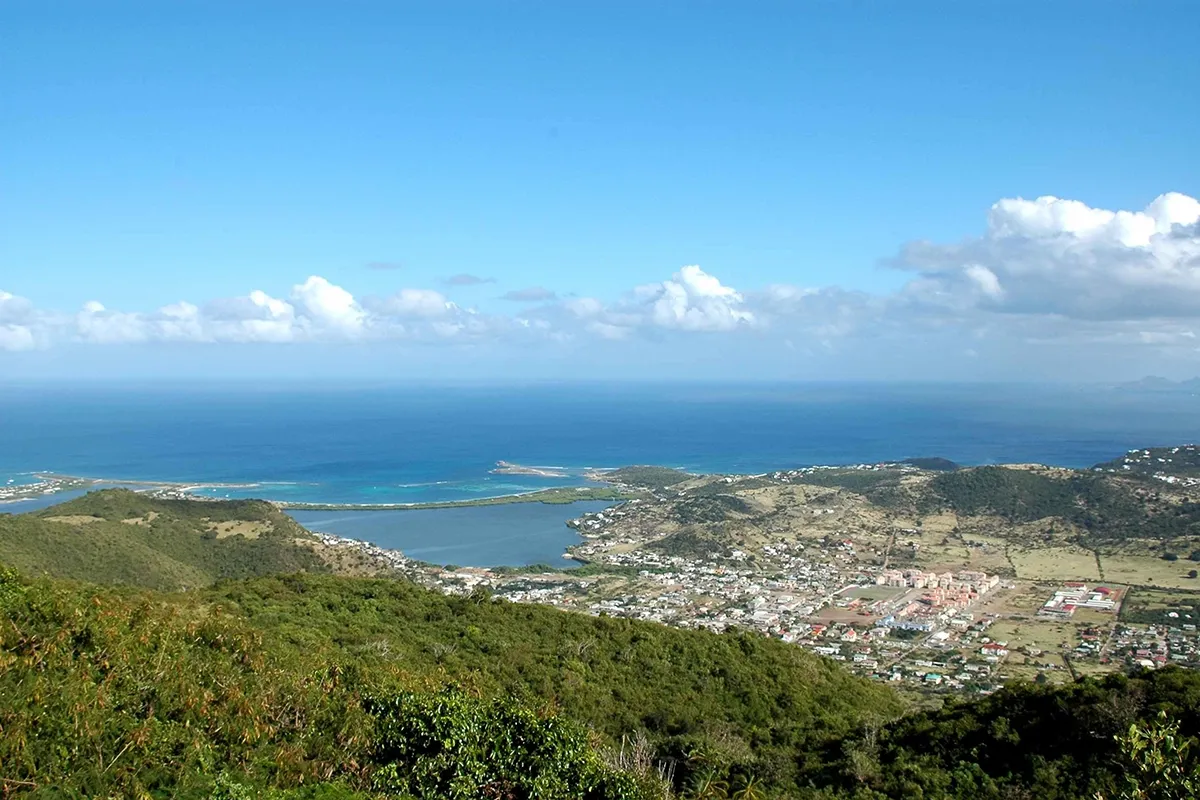
As part of the review of its status, the Collectivité wishes to assume responsibility for environmental matters, which is currently still the remit of the State. But is it reasonable to take on a new responsibility when the territory is already struggling to secure certain sources of funding and to fully exercise the powers it already holds?
Saint Martin is the last overseas collectivity governed by Article 74 of the Constitution not to exercise this power. It now considers that it has the necessary capacity to define and implement its own environmental policy.
The proposal provides for the creation of an Environment Code specific to Saint Martin, a public body dedicated to climate adaptation, and an Ecosystem Protection Fund. The transfer would be accompanied by a transitional period of up to five years, during which central government departments would continue to carry out certain supervisory functions. The Collectivity estimates the cost at €53.5 million over eight years. This sum is intended to cover operating costs, necessary investments and compensation designed to address what the Collectivity considers to be historical shortcomings in environmental protection. However, this estimate is still subject to negotiation and approval. The Organic Law does indeed stipulate that any net increase in expenditure resulting from a transfer of powers must be accompanied by equivalent resources. At the same time,
the Collectivité is seeking to organise its activities. On 11 June, the Executive Council approved participation in ADEME’s
‘Territory Committed to Ecological Transition’ programme. This scheme is designed to enable an assessment to be carried out, an action plan to be drawn up, staff to be trained and the results achieved to be regularly evaluated. The transformation of the ad hoc committee dedicated to the ecological transition into a committee to monitor the territorial COP is a step in the same direction.
These initiatives demonstrate a commitment to preparation. However, they do not yet prove that the Collectivité has the human, legal, technical and, above all, financial resources necessary to exercise such a wide-ranging competence.
For or against?
The territory is directly exposed to the effects of climate change: coastal erosion, coastal flooding, the possible intensification of cyclonic events, reef degradation, lagoon pollution, Sargassum strandings and increasing pressure on natural areas.
National responses are not always adequate. Local regulations could enable faster action, allow standards to be adapted to local constraints, and strengthen cooperation with Sint Maarten. The transfer could also bring greater coherence between environmental policy, town planning, energy, housing and taxation – areas already under the Collectivité’s responsibility. The Collectivité ‘could’, for example, introduce stricter building regulations, protect certain threatened areas, introduce a local environmental tax, or make certain projects subject to ecological compensation obligations.
However, by having environmental powers, the Collectivité would no longer be able to attribute delays or shortcomings to the sharing of responsibilities with the State.
Furthermore, exercising such powers does not merely involve passing a territorial code. It requires lawyers capable of drafting and ensuring the legal soundness of legislation, engineers and technicians to assess applications, sworn officials to monitor their implementation, the means for scientific analysis, and the capacity to defend decisions in court.
However, the difficulties encountered in the post-Irma reconstruction serve as a warning. In its report published in March 2025, the Territorial Audit Office stated that, of nearly €230 million in funding mobilised for reconstruction, only €52.7 million had actually been spent. It attributed this discrepancy in particular to a lack of engineering and project management capacity. Joining an ADEME programme can provide a methodology and support, but it will not replace staffing levels, legal expertise or financial management capacity. Before accepting a new area of responsibility, it would therefore be necessary to know precisely the number of posts required, the recruitment timetable, the qualifications sought and the long-term cost of this environmental administration. This issue is all the more important given that the announced compensation covers a period of eight years. What will happen after that? Will the local authority have to bear the full cost of these expenses on its own?
Town planning and the environment under the same authority
The Collectivité already has control over town planning and issues planning permission. A proactive political majority could adopt stricter standards than those currently in force. However, a majority in favour of development or under significant pressure from the property sector could also relax the rules, reduce the size of certain protected areas or grant more exemptions.
Back in 2014, a parliamentary report had already pointed out that land-use pressure on the coastline had contributed to environmental powers remaining in the hands of the State. The report deemed the transfer to be premature due to the difficulties encountered in exercising the powers already acquired and the complexity of national and European standards. It nevertheless recommended that preparations for this transfer be made within seven to ten years. More than twelve years have now passed: the call for this transfer is therefore not premature in light of this timetable, but concrete evidence of the preparatory work must now be demonstrated.
If the transfer helps to strengthen protections and better tailor policies to the region, it could represent a major step forward. If, however, it merely serves to concentrate town planning, planning permission and environmental regulations in the same hands, without independent oversight, the risk of weakened safeguards and increased urbanisation cannot be ruled out.