



LODEOM: the hope of putting an end to second-guessing
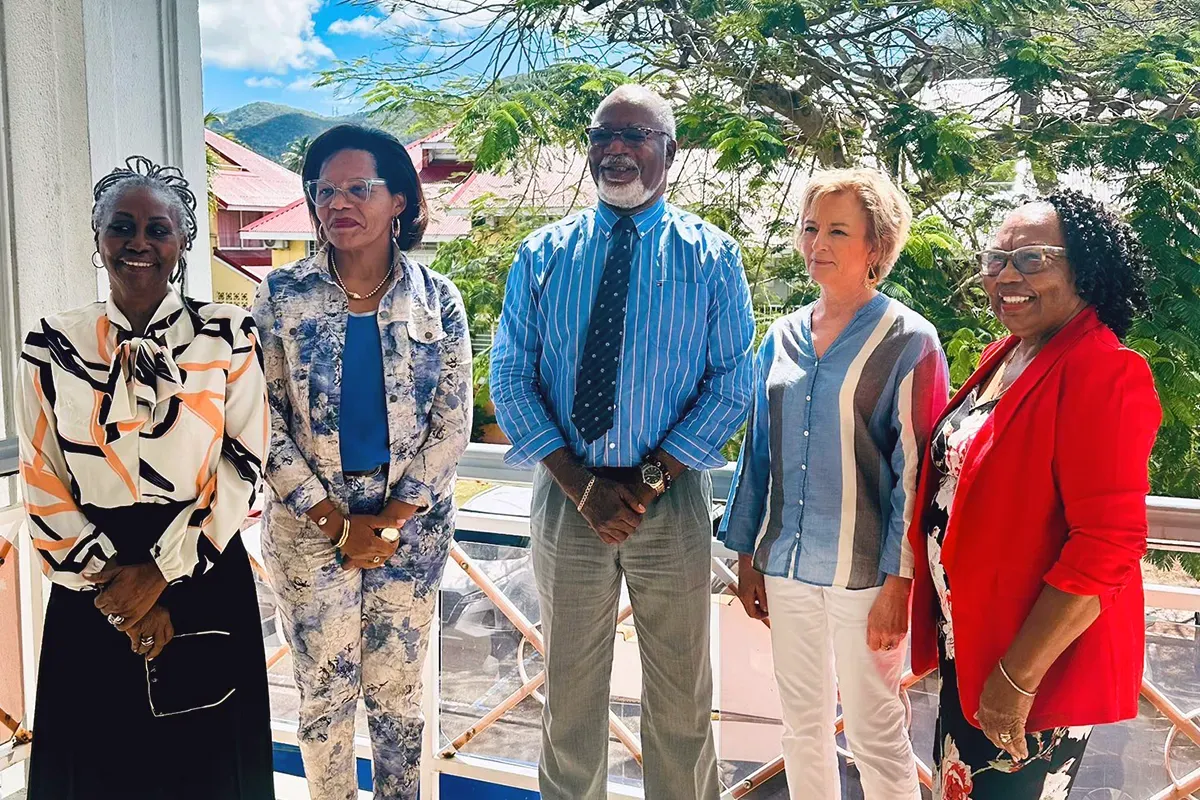
A Senate delegation is currently touring the region to assess the LODEOM scheme. The eagerly awaited report is likely to influence the government’s decisions and help secure the long-term future of a scheme deemed essential to the island’s competitiveness.
On 17 December 2025, the Social Security Evaluation and Audit Board (MECSS) decided to carry out an audit of the contribution exemptions provided for under the Law on the Economic Development of Overseas Territories (known as the ‘LODEOM’ scheme). On 21 January 2026, it appointed Élisabeth Doineau (Union Centriste group, Senator for Mayenne) as general rapporteur and Solanges Nadille (Rassemblement des démocrates, progressistes et indépendants group, Senator for Guadeloupe) as co-rapporteur for this audit. Both were present in the territory this week alongside Annick Pétrus, Senator for Saint Martin, who had strongly advocated for this visit so that the realities of the territory could be fully taken into account.
Why this review?
The LODEOM scheme costs around €1.5 billion, of which €0.7 billion represents the additional cost compared to standard social security contribution relief. For the past two years, attempts at reform within the framework of the social security financing bills have provoked strong reactions from overseas senators, who view this ‘across-the-board cut’ approach as uncoordinated and potentially economically damaging to certain territories. The available assessments, which are often incomplete, are also contradictory. In these circumstances, the MECSS wished to carry out an in-depth study of this scheme and make it less complex.
The aim, beyond the necessary reform, is to draw up an analysis to better understand the scheme’s benefits in each territory, taking into account its specific characteristics. The mission will therefore endeavour to present the main possible scenarios, outlining their advantages and disadvantages, in the form of a ‘toolkit’. All overseas territories are subject to this review via videoconference, with the exception of Saint-Martin, which is the subject of face-to-face meetings. This is a significant undertaking, because, as Elisabeth Doineau points out, in mainland France – far removed from the realities on the ground – senators tend to treat everyone the same, whereas it is unthinkable to treat all territories in the same way.
What are the challenges for Saint Martin?
The relevant economic stakeholders were sent a highly targeted questionnaire in advance to help prepare the questions posed by the delegation. On the ground, the three senators met with the Collectivité’s departments and the President, the Prefecture’s departments and the Prefect, the president of MEDEF – FIPCOM in Saint-Martin, members of the CCISM, as well as tax collection agencies and trade unions or business federations. These meetings were all the more important given that the territory still lacks statistical data and that, to date, it is impossible to estimate the impact of a reduction, even of just a few per cent, on businesses. With a view to implementing a differentiated approach based on the specific challenges and structural difficulties faced by the territories concerned, this has enabled them to gather, at source, information on the island’s economic development.
In Saint-Martin, the dual insularity – a legacy still very much in evidence from the 2017 crisis – an economy reliant on small and medium-sized enterprises, and direct competition from the Dutch side or indirect competition from the Caribbean islands where labour costs are much lower, make the LODEOM indispensable; without it, businesses would no longer be competitive. The risk if it were to be abolished, Annick Pétrus points out, is that we would see businesses fleeing to the south of the island. The LODEOM is not merely incidental; it is necessary because the needs it addressed when it was introduced are still relevant today.
The report and its conclusions will be presented at the end of May to the MECSS, then to the Senate’s Social Affairs Committee… a report grounded in reality that could significantly influence the final decision to be taken by the government and on which the Mission announced by the Minister for Overseas Territories should be based. All this takes time, but the island’s long-term economic future is at stake. For the coming year, let us hope that no presidential candidate will venture to tamper with the LODEOM.