



Economic outlook: a recovery that risks being brought to a sudden halt
According to the latest report from the Regional Institute for Statistics and Economic Studies (ITSEE), the indicators recorded for the fourth quarter of 2025 were fairly encouraging for the region’s economy. But will this trend continue into 2026? Nothing could be less certain. Geopolitical tensions and energy prices are already having an impact in Europe, slowing down the economy in France and, in turn, risking to jeopardise the economies of the overseas territories. Saint Martin will not be spared.
In the fourth quarter of 2025 in Saint Martin, the economic situation was mixed. The number of jobseekers fell slightly (-1.8%), but this decline was mainly due to the implementation of the Full Employment Act, rather than a genuine improvement in the labour market.
At the same time, economic activity showed positive signs: business start-ups began to rise again (+4% over the quarter, +11% year-on-year) and salaried employment increased, with 8,116 employees (+15% over the quarter, +5% year-on-year). This momentum was mainly driven by the services sector, which accounts for 45% of establishments and 41% of jobs, with a 7% rise in the workforce.
Conversely, some sectors faced difficulties. The hotel and restaurant sector, which accounts for 14% of employers and 23% of salaried employment, recorded a 2% decline in its workforce. The retail sector, which accounts for 23% of employers and 18% of salaried employees, also declined, albeit more modestly (-1%). In the transport sector, air traffic fell by 2% year-on-year, confirming a slowdown in the tourism sector. Conversely, maritime transport and freight saw growth, with an increase in port calls over the year and a sharp rise in freight volume of 10% year-on-year.
Finally, on the social and commercial front, indicators remain mixed. The number of RSA recipients rose slightly towards the end of the year (+1.6%), whilst commercial activity picked up with increased footfall and renewed optimism among retailers, although caution remained the order of the day. Ultimately, Saint Martin’s economy showed encouraging signs, driven by services and business start-ups, but remained fragile, particularly due to the slowdown in tourism and uncertainties regarding employment.
What can we expect in 2026?
According to the INSEE economic report published last March, whilst global growth held up in 2025, inflation had nevertheless picked up and growth had weakened, particularly in Europe. Today, the rise in oil prices (≈ $100) has pushed inflation back above 3% in the first quarter of 2026. The direct consequence: a decline in household purchasing power and the risk of an economic slowdown. Wages are rising only slightly in the face of inflation, and households are drawing on their savings and, above all, beginning to cut back on spending. The situation depends heavily on the development of geopolitical tensions and, consequently, on energy prices.
The immediate effects
Back on the territory, certain warning signs are unmistakable. The price at the pump has been rising steadily since March, recording increases of 10 cents per litre each week and rising from €1.19/L at the start of March to €1.45/L on 6 April. On the same date, diesel reached €1.73 per litre. Yet Saint Martin’s supply does not depend on the Middle East… Local
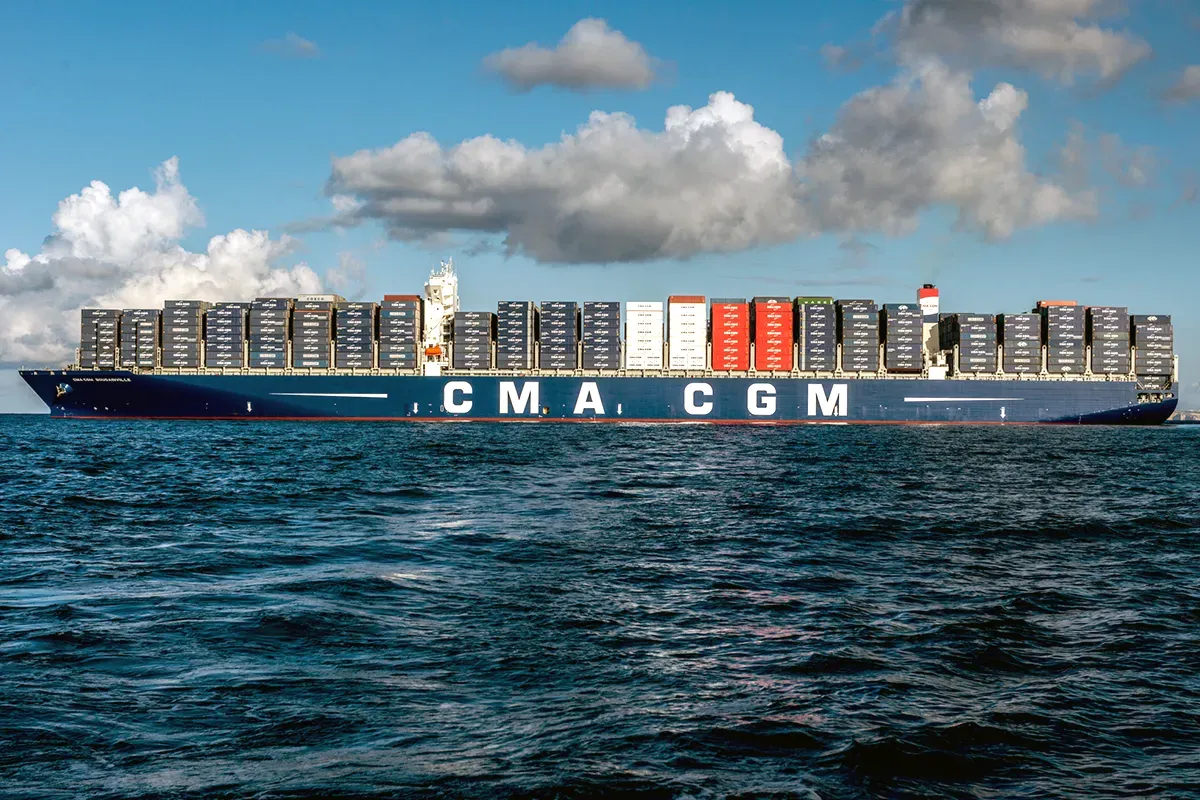
businesses importing goods are being affected by rising transport costs. Air France has revised the cost of its war surcharge twice, even before the implementation deadlines, leading to a constant rise in freight costs, particularly for fresh produce. As for other goods arriving by sea, whilst prices remained stable in the first quarter of the year, CMA CGM increased its transport costs on 1 April. The fuel surcharge thus adds €271 to a 40-foot container (€326 for a refrigerated container).
Another immediate effect is the price of air tickets between the Caribbean and mainland France, which rose by €50 in March and again by €50 in early April (+€100 return in economy class) on Air France flights. Air Caraïbes has also revised its fuel surcharge since 11 March, but to a more moderate extent
(€25 per leg in Soleil and Economy classes).
At the same time, public aid – already scaled back as the French government has tightened its purse strings – is likely to be further reduced for the overseas territories. As for the Collectivité’s finances, they have been put under severe strain, and the bailing out of the coffers with loans will, once again, impact the population, who will eventually have to foot the bill.
As we know, wars only enrich arms dealers (an expression that should now be replaced by ‘drone dealers’), and what is rising today is unlikely to fall tomorrow.