



Budgetary guidelines for 2026
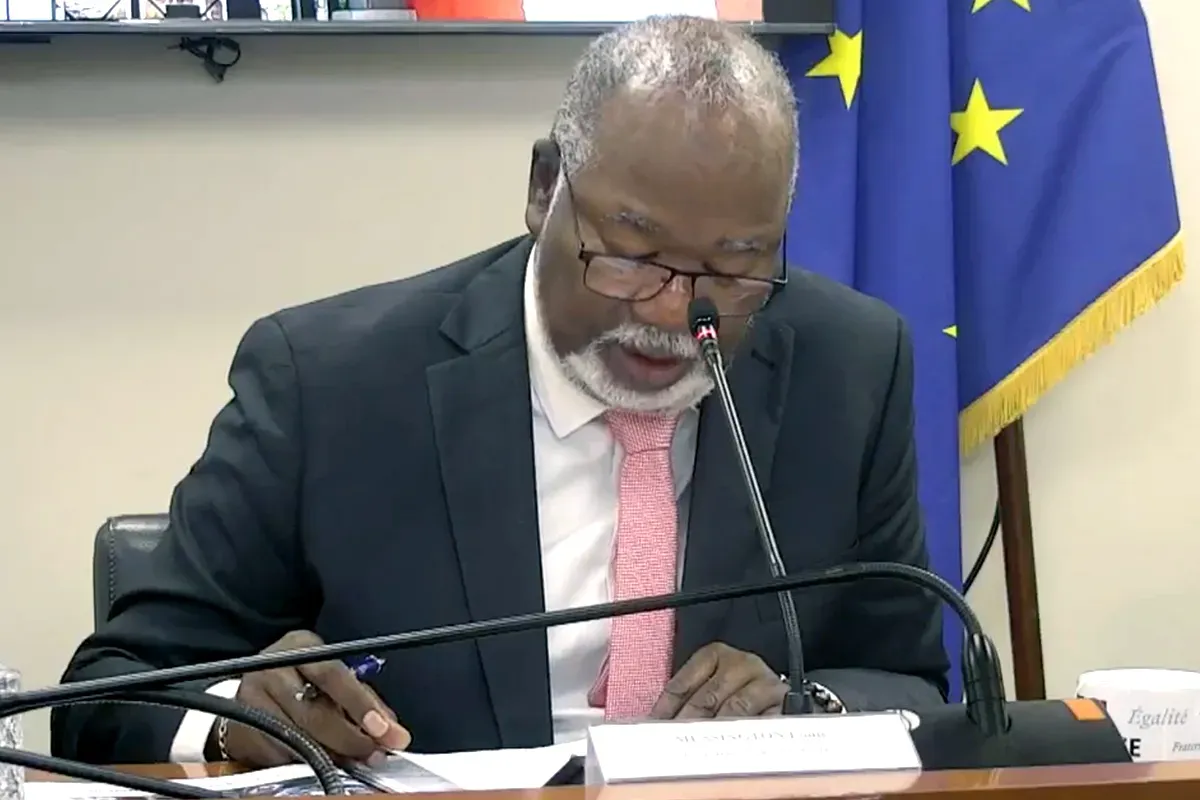
The Territorial Council meeting on 13 February opened with the presentation of the report on the 2026 budget guidelines. This is an important step which, while setting the political, financial and strategic course for the coming year, is nevertheless provisional in nature, as President Mussington pointed out in his introductory speech.
The figures for 2025 should be analysed with caution, as a number of adjustments still need to be made to revenue (around €30 million) and expenditure (around €6 million), which makes these forecasts uncertain. The final budget will be voted on in June.
However, Louis Mussington highlighted several positive signs, including control of the wage bill, more strategic management of expenditure, and debt levels considered sustainable, reinforced by a €30 million loan that has secured cash flow and investment. For 2026, the stated objective is clear: to maintain working capital of around €40 million in order to guarantee the financial stability and capacity for action of the local authority. Structural projects (media library, secondary schools, roads, public lighting, video surveillance) remain at the heart of the mandate's priorities.
A report to be taken with a pinch of salt
This report comes at a time of international and national economic uncertainty, marked by slowing growth, persistent geopolitical tensions, inflation still under surveillance and tight budgetary margins for local authorities. In Saint-Martin, the situation remains fragile due to the high cost of living, significant structural unemployment and heavy dependence on tourism. In light of this context, the local authority is adopting a strategy of caution and prioritisation. Operating expenditure is expected to decrease in 2026, with a particular focus on general expenses and stabilisation of the wage bill. Revenue remains stable overall, with no tax increases, in order to preserve the purchasing power of residents. Despite pressure on net savings, the Collectivité is maintaining a high level of investment, made possible in particular by a £30 million loan taken out on favourable terms. For 2026, investment will be strictly targeted and prioritised around two major policy areas: ecological transition and social transition, while ensuring medium-term financial sustainability. The objective is ambitious but realistic, according to the president. However, the opposition members have
a different interpretation of the report. They point out that the projects already announced in 2025 were initiated by the previous administration and some are still struggling to materialise. No new major projects have been launched since then, emphasised Marie-Dominique Ramphort (Team Gibbs). She pointed out that the opposition has been warning about certain initiatives (including Air Antilles) since the beginning of the term of office and that the analysis made at the time has now been confirmed by the latest report from the Territorial Chamber of Accounts... and is also the subject of investigations against the President. Jules Charville said he was surprised that the opinions of the opposition, as well as those of the Economic, Cultural and Social Council, were not taken into account.
Good resolutions or wishful thinking?
This is the question raised by the opposition upon reading the multi-year investment plan. However, certain indicators point to some management efforts: actual operating expenses, which had increased significantly between 2022 (€135.8 million) and 2025 (€164.25 million), are provisioned at €161.5 million for 2026, including €35 million in general expenses, €64 million in personnel expenses, €19.4 million in social assistance expenditure (an increase), €1.1 million in financial expenses, €2 million in specific expenses and €40 million in other current management expenses (subsidies). Tax revenues are estimated at €150 million for 2026 (€149.5 million in 2025).
Finally, investment expenditure rose from €23.2 million in 2022 to €70 million in 2025, and was expected to be around €67 million in 2026 for estimated revenue of €69 million (grants and various funds, subsidies and... loans!). During this Territorial Council meeting, Jules Charville warned of the risks associated with debt, which could put the Collectivité in the red – with a new €10 million loan being considered – particularly in terms of its long-term self-financing capabilities. The alarm threshold is between 10 and 12 years; it is currently at nearly 8 years. Other items discussed at
this Territorial Council meeting included the sale of the plot of land located in Griselle to the Webster family and the updating and compliance of addressing in the territory, which we will return to in our next edition.