


Sandy Ground: cases are progressing slowly, but hopes remain
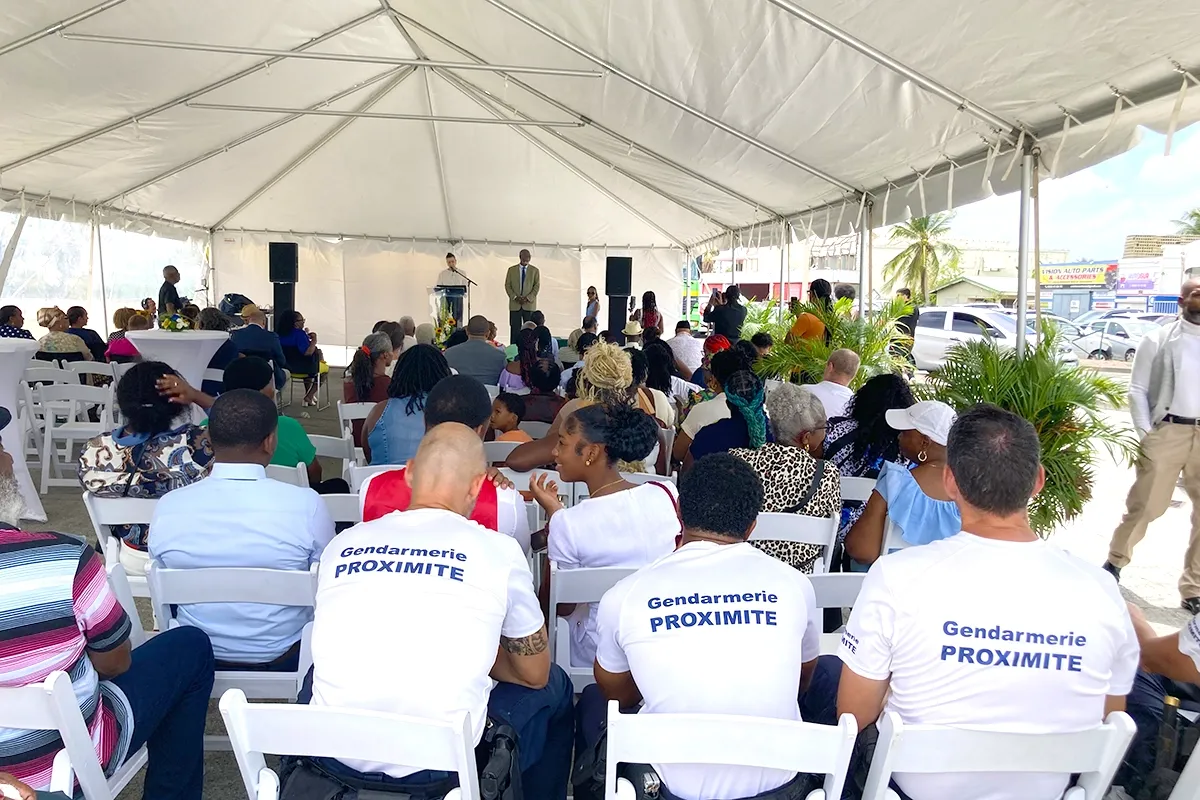
More than just a celebration, the Sandy Ground neighbourhood festival is a tribute to an entire community. However, the official speeches also provide a forum for a war of words between neighbourhood representatives, residents and elected officials. Once again this year, during the five speeches on 15 August, the focus was on the progress of projects, some of which are stalled… much like some of the residents themselves.
Georges Richardson, chair of the “Sandy Ground On the Move” association, opened the speeches by calling on the authorities to take action, particularly in the area of energy, expressing concern for the future of Sandy Ground for generations to come. MP Frantz Gumbs addressed broader issues such as improving the Organic Law, environmental jurisdiction and the hospital… for which, he admitted, political will is needed, as well as resources, which are constrained not only by national debt but also by local debt.
Cédric André, representative of Neighbourhood Council No. 6, got straight to the heart of the matter, criticising the Collectivité and the State for failing to heed the grievances raised. He believes that a system must be found to ensure that neighbourhood councils are heard; otherwise, their inclusion in the Organic Law is meaningless. He also highlighted the needs of voluntary organisations in managing disengaged young people. In his view, prevention relies on initiatives that enable young people to build a future for themselves. However, he believes that it is volunteers from community organisations who carry out a large part of this work, and “today, these organisations are at breaking point”. He also called for greater awareness of the wave of crime that has put the population under pressure. “There is no question of class or race when it comes to people’s suffering,” he said, calling on everyone to put aside individual interests “so that this island can return to how it was before”.
An update on ongoing projects
After praising the solidarity and resilience of the island’s residents, Louis Mussington provided an update on the investments undertaken by the Collectivité, whilst acknowledging that some projects were not yet as far advanced as he would have liked. “Although I would have liked to present you with completed projects, administrative timelines are not the same as political ones,” he explained before going into detail about the various construction sites. At the Albéric Richard Stadium, clearance and levelling work is nearly 80 per cent complete, the complete refurbishment of the fence has begun and the installation of the modular changing rooms is progressing. The second phase of work on the sports complex – involving the construction of toilet facilities, the installation of ball-stop barriers, the roofing of the changing rooms and the development of the car park – is currently being prepared. The chairman also gave assurances that the guardrails, which should have been installed between the Jérôme Beaupère and Aline Hanson schools and the Sandy Ground bridge, will be fitted by September at the latest. Road repairs are also planned, as is the installation of new speed bumps. Finally, whilst the demolition of the old MJC building has been completed, the project is still at the design stage. Louis Mussington, whilst regretting that the planning studies are dragging on, acknowledged that delays were to be expected.
Looking ahead to a second term of office
The Mayor remains optimistic about the progress of the projects, stating that “What is not done during this first term of office will be done during the second”. On the subject of neighbourhood councils, he was very clear: “Yes, I have heard you, yes, I have understood you!”. He acknowledged the “urgent need” to provide them with better support, believing that efforts must be stepped up and dialogue strengthened. However, “there is no question of removing them from the organic law”.
On the subject of crime, he condemned the recurring incidents in which “a few thugs seek to tarnish the neighbourhood’s image”. These “troublemakers do not represent the majority”, and he called on the public to take action to report such incidents. Furthermore, he stated that he would no longer visit the area in person, as he had done in the past, so as not to give them any further credence.
Fabrice Thibier concluded his remarks by pointing out that, faced with all these challenges, the State cannot provide all the answers on its own. He did, however, point out that work on upgrading the water network was due to begin, that efforts were underway to clean up the lagoon, that 4,500 people had been assisted by France Services last year, and that the State was also supporting the sporting sector by contributing to the renovation of facilities. It is certainly a little too slow, he acknowledged, but “things are moving forward”.