
Women’s Stories: Breast Cancer

To mark Pink October, Le 97150 is giving a voice to women who have battled breast cancer, are still fighting the disease, or have returned to their former lives. Their stories are important; they highlight the importance of screening, but also remind us that every woman is different… Some struggle alone, whilst others want to share this life-changing experience or the challenges they are facing. All of them convey a message of hope.
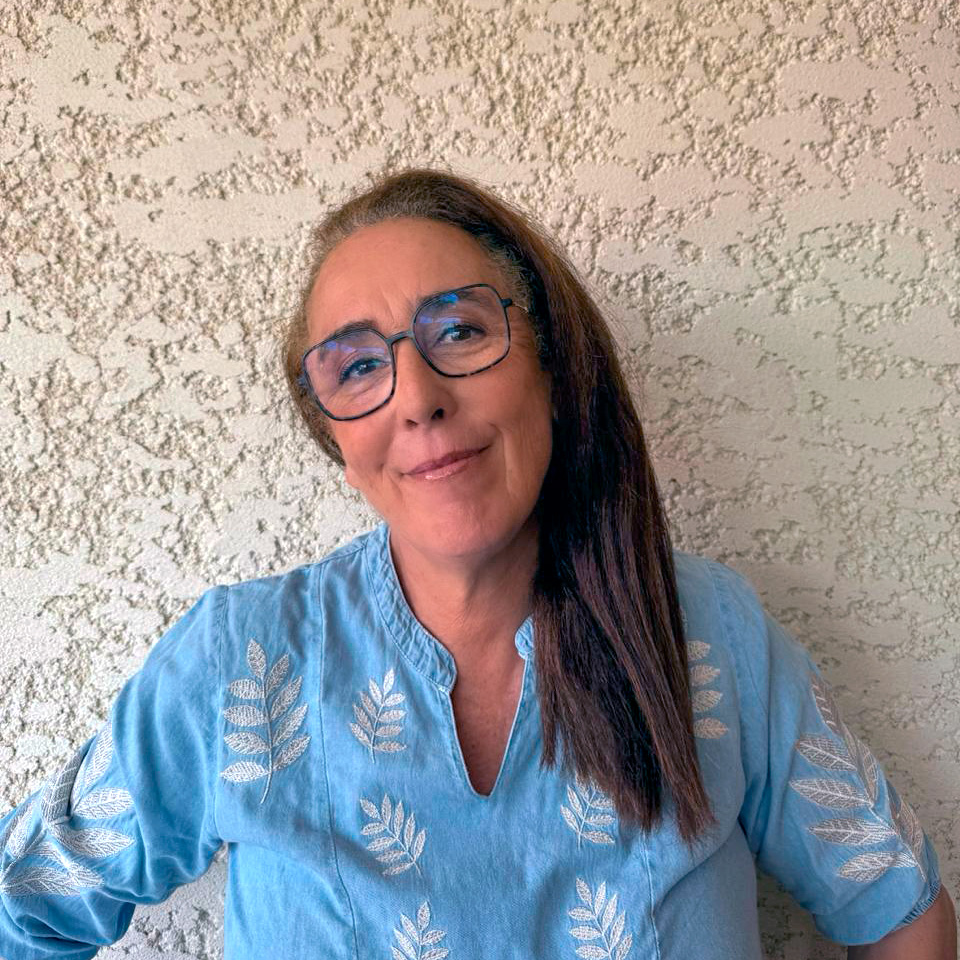
For this second instalment, Stéphanie Brouwers has chosen to talk about her relapse, 18 years on, and her somewhat unconventional journey, which combines medicine with her very own mental approach.
A teacher in a SEGPA class in Quartier d’Orléans when she was diagnosed, she is now getting back to her life after a hiatus, with new projects. Music, with a song that will be a celebration of women; a musical; a documentary featuring young people; a ‘Pink October’ village project; a novel… Her philosophy? Not to be afraid of death, but to celebrate life!
How did you discover you had cancer?
I was 29 and a young mum to an 18-month-old. I felt it when I examined myself. I had no family history of the disease and wasn’t a carrier of the gene, but the verdict came on 1 October 2007: stage 4 cancer. Surgery, chemotherapy and radiotherapy for over a year… Five years later, I was told I was in remission. Naturally, I had annual check-ups, but in September 2025, an MRI scan revealed a new, grade 3, hormone-dependent cancer. Eighteen years later, almost to the day.
What is your situation today?
After 18 courses of chemotherapy, from late November to late March, I was in complete remission – in other words, after the operation, there was no more cancer. So I was able to have breast reconstruction using an implant in May. I’ve been back in Saint Martin since July, but I’m still undergoing targeted therapy for six months. Next spring, I hope to have the tattoo done and have the ICD (implantable catheter port) removed.
How did you adapt your daily life and your work?
As for the first, I was lucky to have my family, and I lived to bring up my child and watch them grow up. In a way, I rose above the illness. This time round, I was truly supported by my partner and buoyed by all the messages I received. I remembered something one of my pupils said to me: ‘Don’t let anyone steal your light; bring it back with you.’ I felt that strength connecting me to Saint Martin. I left with some soursop leaves, which I used in herbal tea and as a topical treatment… when I returned in July, I went to thank the soursop tree. Today, I’m waiting for a post – perhaps a different one – with the French National Education System.
Why did you choose to talk about this?
If it can help certain women mentally, I simply want to give them strength and offer them hope.
What is your relationship with the illness?
Each time, we go through the same stages: sadness, fear, anger and, finally, a sense of injustice. Afterwards, we come to terms with it and manage to reach a state of gratitude. You then see life differently, because it brings you back to what really matters, and you experience some very meaningful moments. It takes a lot of mental strength, as you inevitably do a lot of soul-searching, but ultimately it opens up new perspectives…
Interview by Ann Bouard